Water delivery vs an on-site drinking water system.
19 L jugs and packs of bottles, or drinking water made where it is drunk? Cost, logistics, storage, island shortages, plastic and hygiene, compared for businesses and homes in Thailand.
The short answer.
Delivered water is cheap per litre in 19 L jugs and expensive in bottles, but both depend on trucks, ferries, storerooms and staff time. An on-site drinking water system makes the water where it is drunk: no deliveries, no stock to run out, no jugs or bottles to send back.
For a hotel, restaurant, office, school, clinic or villa that drinks water every day, an on-site system usually removes more handling, risk and plastic than it adds. Minairal installs two kinds in Thailand: Air, which makes water from the humidity in the air, and Pure, which filters the existing water line. Both serve filtered drinking water with minerals added.
For businesses and homes in Koh Samui, Koh Phangan, Phuket, Hua Hin and Bangkok.
Side by side.
What each option asks of the site, beyond the price on the invoice.
| Criterion | 19 L jug delivery | Bottle packs | On-site system (Air or Pure) |
|---|---|---|---|
| Price you see | About ฿20 a refill on the islands, roughly ฿1 a litre | ฿13 per 0.5 L or ฿23 per 1.5 L bottle, about ฿15 to ฿26 a litre | Set after a site assessment, then electricity and scheduled filter changes. No product to buy |
| Handling | Ordering, receiving, lifting jugs of about 20 kg onto the dispenser, returning empties | Ordering, receiving, chilling, sorting and disposing of empties | Scheduled maintenance by Minairal technicians |
| Deliveries | Every week or more: about 37 jugs a week for fifty people | Pallets and packs by truck, and by ferry to the islands | None. The water is made on site |
| Storage | Full jugs and empty jugs | Packs before use, empties after | The footprint of the system itself, countertop or floor |
| When supply is disrupted | Ferry, weather and high-season demand decide when the next jugs arrive | Same supply chain, same delays | Air needs no water connection and keeps producing. Pure follows the water line |
| Plastic | About 15 g per refill: a 750 g jug over around fifty refills | 10 g per 0.5 L bottle, 28 g per 1.5 L bottle, used once | No jugs, no bottles |
| Water drawn | 1.32 litres used per litre of bottled water sold | 1.32 litres used per litre of bottled water sold | Air draws nothing from wells, aquifers or the mains. Pure filters the existing supply |
| Hygiene | Depends on how each reused jug was washed, stored and changed, and on cleaning the dispenser | Depends on the bottler and on storage, often in heat | Treated where it is drunk. TDS and pH checked at every maintenance visit |
| Service | Your supplier's delivery round | Your supplier's delivery round | 4 hours average response time, from service centres in Koh Samui, Phuket and Hua Hin |
What delivery really costs.
On price per litre, a 19 L jug is hard to beat: a typical island refill costs around ฿20, roughly ฿1 a litre. Bottles are a different story. At ฿13 per 0.5 L bottle and ฿23 per 1.5 L bottle of mineral water, a litre costs between ฿15 and ฿26.
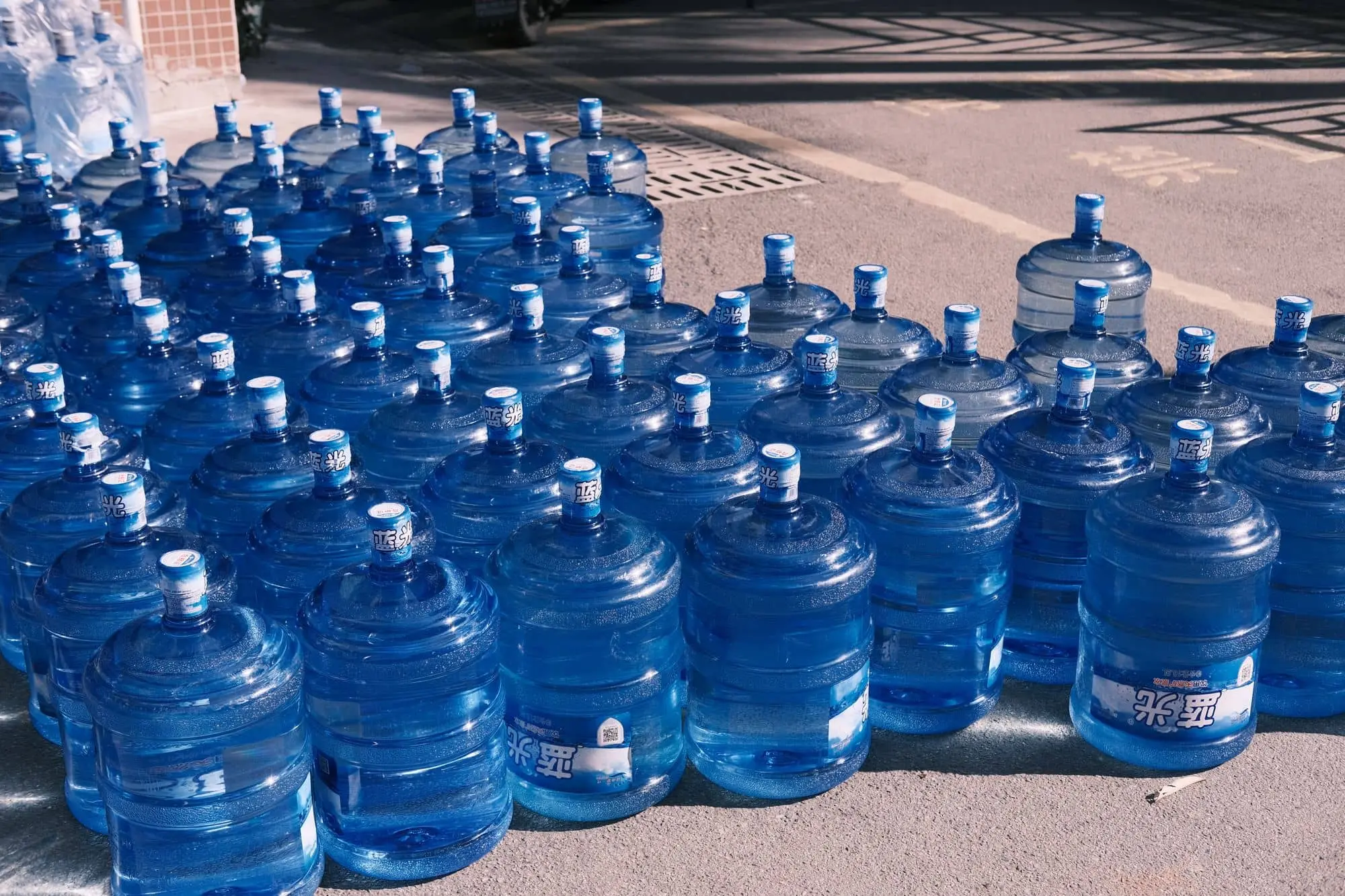
The invoice is not the whole bill. A site of fifty people drinking two litres a day needs about 37 jugs a week, close to 1,900 a year, each one ordered, received, carried, stored, lifted onto a dispenser and sent back. That is staff time, storeroom space and a delivery schedule the site does not control.
An on-site system has no product to buy. Its price is set after a site assessment, by model, number of units and service plan; after that, the recurring costs are electricity and scheduled filter changes. Put your own headcount and prices into the bottle quiz on our home page or the impact calculator.
Logistics, storage and island shortages.
Delivery turns drinking water into a supply chain. Someone orders, someone signs for the truck, someone lifts a jug of about 20 kg onto the dispenser, and a storeroom holds full jugs, empty jugs and packs waiting to be chilled.
On Koh Samui and Koh Phangan, every jug and every pack also crosses the sea by ferry before the truck. Rough weather in the monsoon months, or the rush of high season, is enough for a delivery to slip, and the site then lives on what is left in the storeroom.
An on-site system removes the chain. Air makes water from the humidity in the air with no water connection, so it keeps producing when deliveries and the mains do not. Pure filters the water line the site already has. Our own technicians service both, with a response time of 4 hours on average.
Reused jugs and hygiene.
A 19 L jug is collected, washed and refilled many times over its life, around fifty refills in the assumption our calculator uses. How well each jug was cleaned, and where it waited on the way, sometimes stacked in the sun on a pavement or a pier, is out of the site's hands.
The dispenser that holds the jug needs regular cleaning too, and every jug change opens the water path. Bottle packs avoid reuse, but their quality depends on the bottler and on how they were stored, often in heat.
With an on-site system, water is treated where it is drunk: filtration, UV, then calcium, magnesium, potassium and sodium added. TDS and pH are checked at every maintenance visit, and water produced on site can be tested once a year by an independent ISO 17025 accredited laboratory in the business service plan. The full sequence is on the water quality page.
Plastic and water drawn.
A reusable jug is lighter on plastic than single-use bottles, but not plastic-free: about 15 g per refill, a 750 g jug spread over around fifty refills. Single-use bottles weigh about 10 g per 0.5 L and 28 g per 1.5 L, and are used once. Fifty people drinking from half-litre bottles get through 73,000 bottles a year.
Bottled water also uses more water than it delivers: industry figures put it at 1.32 litres per litre sold, the litre in the bottle included. An Air system draws nothing from wells, aquifers or the mains; a Pure system filters the supply the site already has. Both remove the bottling, the freight and the empties. The assumptions are on the sustainability page.
Who switches first.
Delivery still makes sense for a short event, a temporary site or a point with no electricity. For a site that drinks water every day, all year, these are the places where an on-site system changes the most.
Questions about water delivery.
More answers on the FAQ page.
Is water delivery cheaper than an on-site water system?
Per litre, a 19 L jug refill is cheap, around ฿20 on the islands or roughly ฿1 a litre, while bottles cost about ฿15 to ฿26 a litre. Delivery also costs staff time, storage and a schedule the site does not control. An on-site system has no product to buy: its price is set after a site assessment, then the recurring costs are electricity and scheduled filter changes.
How many 19 L jugs does a business use?
At two litres per person per day, one person drinks about 38 jugs a year. A site of fifty people needs about 37 jugs a week, close to 1,900 a year.
Are reused 19 L water jugs hygienic?
It depends on how each jug was washed, refilled and stored, and on how often the dispenser is cleaned, and most of those steps happen away from the site. An on-site system treats the water where it is drunk, and Minairal checks TDS and pH at every maintenance visit.
What happens on an island when deliveries stop?
With delivery, the site runs on its stock until the next ferry and truck. An Air system makes water from the humidity in the air with no water connection, so it keeps producing when deliveries and the mains do not. The systems work between 30% and 80% relative humidity.
Can I try an on-site system before deciding?
Yes. Minairal offers a free one-week trial for businesses and private homes in Koh Samui, Koh Phangan, Phuket, Hua Hin and Bangkok.
Related pages.
From the blog.
On-site water generation and fewer deliveries
What changes when the water is made where it is served.
Read the article
How air-to-water is replacing bottled water in Thailand
The plastic problem, and what one system replaces each year.
Read the articleWhy offices are giving up water jars
Recurring costs, hygiene and sustainability goals compared.
Read the article
Stop counting jugs. Try it for a week.
A free one-week trial for businesses and homes in Koh Samui, Koh Phangan, Phuket, Hua Hin and Bangkok. We install, you drink, then you decide.