Drinking water systems for clinics and spas.
Water that keeps flowing when the network does not, quality you can document, and maintenance you can follow. For patients, members and spa guests, in waiting areas and treatment rooms.
What a clinic or spa needs from its water.
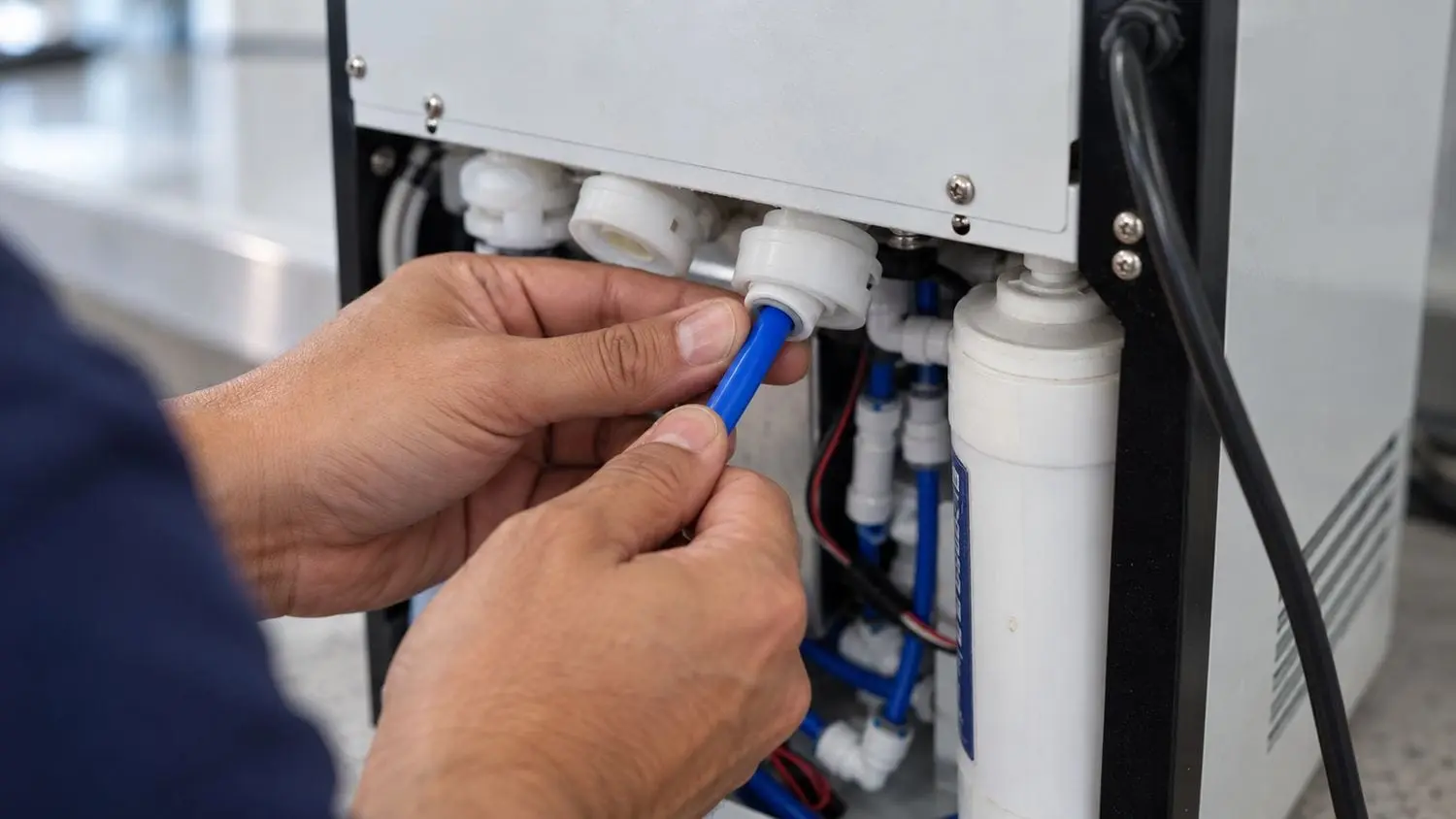
Clinics, wellness centres and spas share three requirements that weigh more here than elsewhere: water must always be there, its quality must be documented, and its maintenance must be traceable.
The recommended configuration.
Countertop units in treatment rooms, floor-standing stations in shared areas, and Air wherever continuity outweighs everything else.
Air, for continuity.
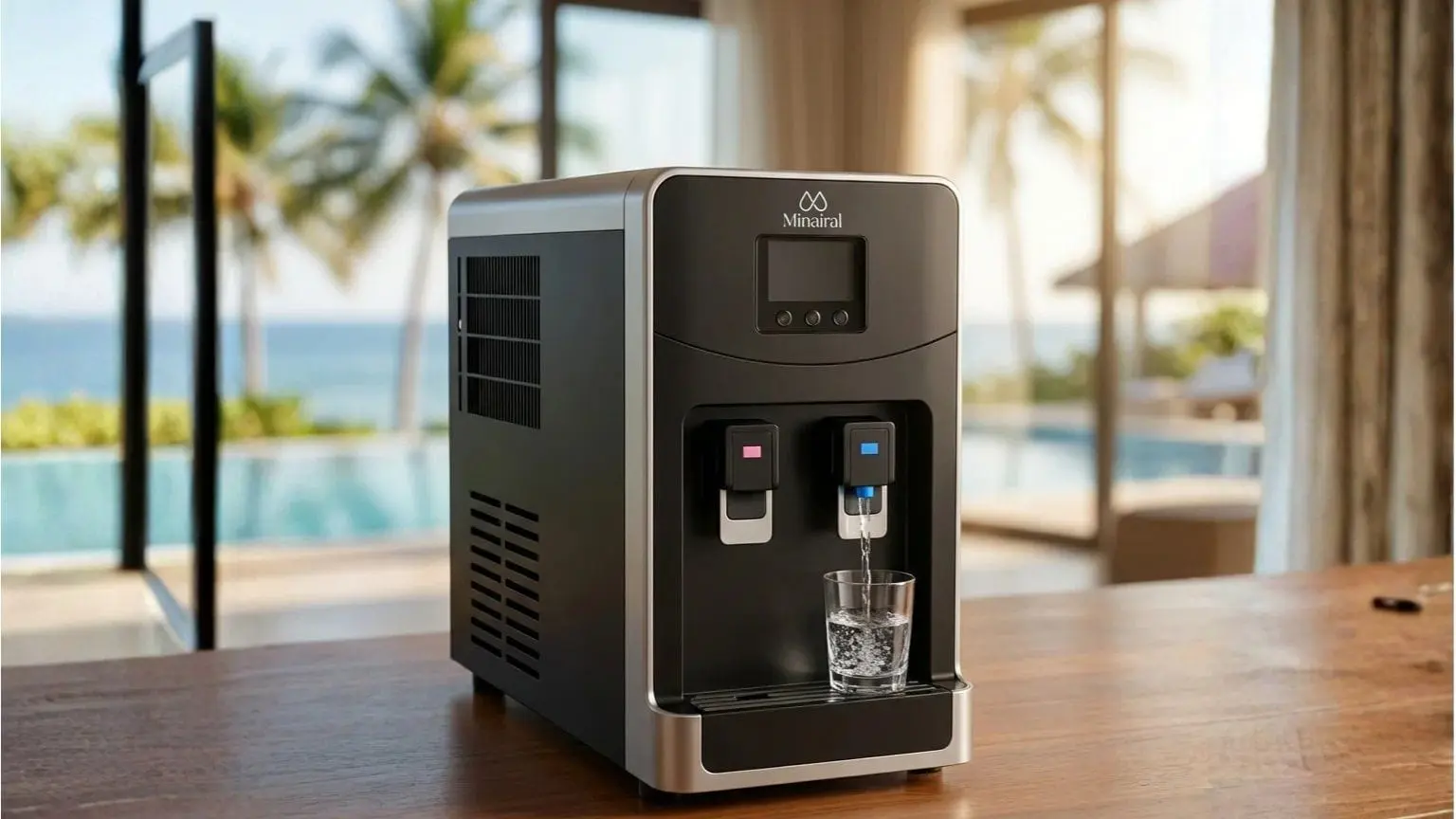
Air takes the supply off the network entirely: the unit makes water from humidity, so a mains cut or a late delivery does not reach the patient. It needs only to be plugged in. A wellness centre in Koh Samui runs Air systems across its treatment and guest areas.
Explore the Air range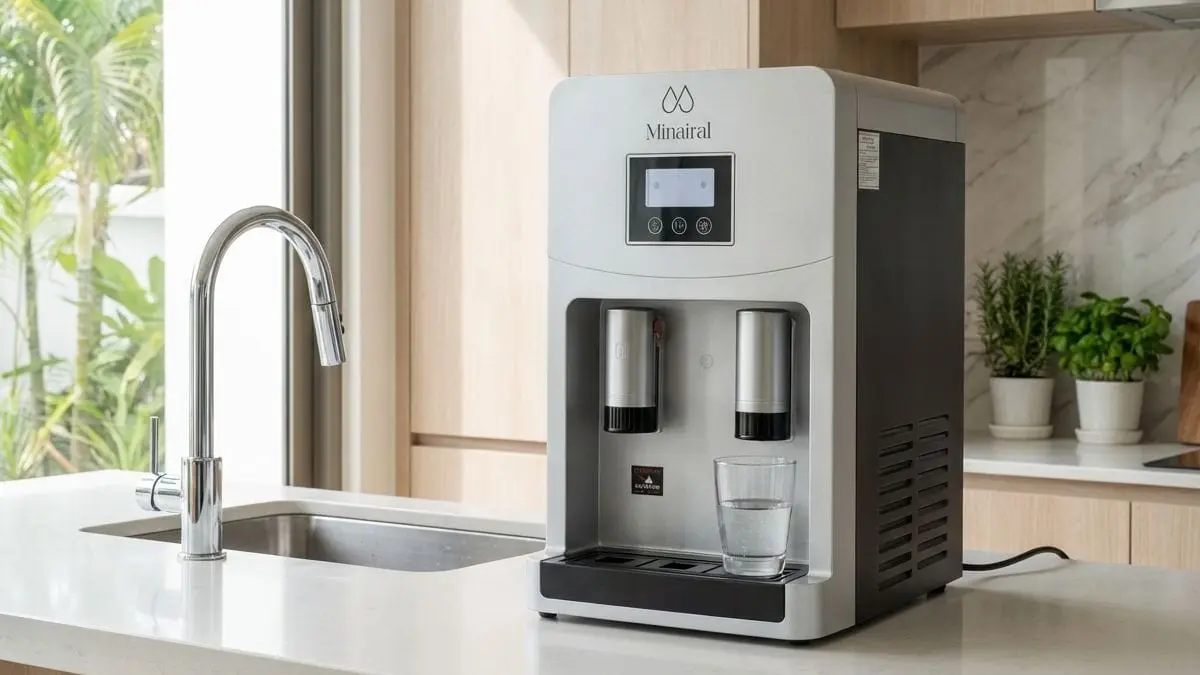
Pure, for stable volume.
Pure gives a stable volume from the existing line, with continuous UV-C sterilisation and internal recirculation in stainless steel tanks. Hot at 90°C and cold at 4°C. Where both continuity and volume matter, the two technologies are combined.
Explore the Pure range
What the site stops buying.
The method published on this site: 2 litres per person per day over 365 days. In a clinic or a spa, count the staff and clients present on an average day.
- Assumption
- 30 people on site each day, staff and clients
- Daily volume
- 30 × 2 L = 60 litres a day
- Yearly volume
- 60 L × 365 = 21,900 litres
- In 0.5 L bottles
- 21,900 ÷ 0.5 = 43,800 bottles a year
- In 19 L gallons
- 21,900 ÷ 19 = 1,153 gallons a year
Clients who stay an hour drink less than 2 litres on site, so for a day spa the figure is an upper bound. For a clinic with staff present all day, it is close to the real volume.
The impact calculator applies the same method to your own numbers.
Quality, documented.
The treatment sequence is the same principle on every system: sediment and pre-filter, reverse osmosis at 0.0001 micron, post-carbon polishing, then a Biocera mineral filter that restores calcium, magnesium, potassium and sodium. Air systems start with an air filter and add UV. The Air Stand Pro runs seven stages, including a UV lamp in the tank.
Components are certified for material safety. TDS and pH are checked during routine maintenance, and the business service plan includes a yearly test of the water produced on site by an independent ISO 17025 accredited laboratory. The report for your site is available on request.
Service and maintenance.
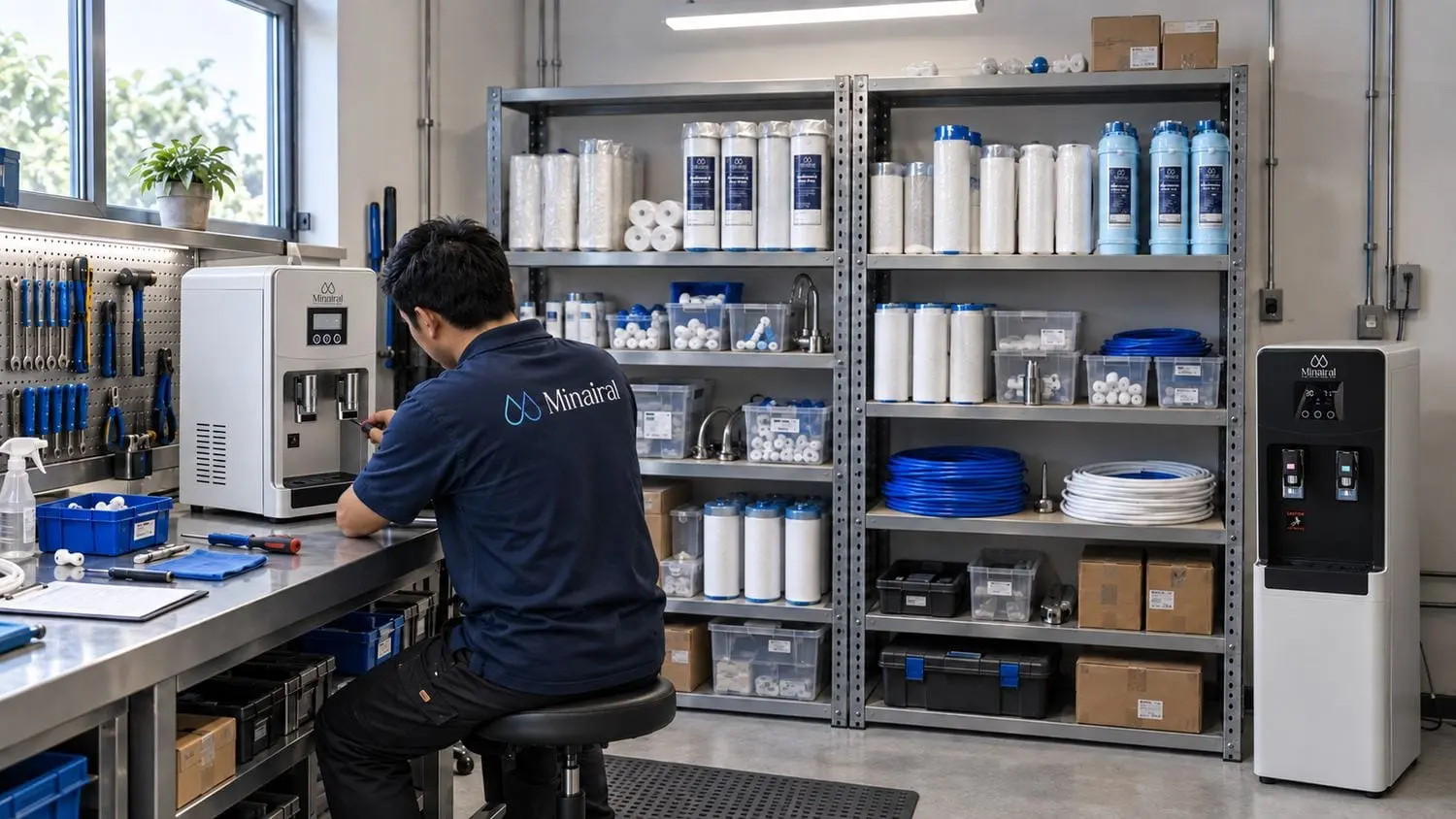
Maintenance is scheduled, not left to chance: a plan set at installation, a named local contact, and technicians from the nearest service centre with parts in stock.
- Filter schedule
- Sediment every 4 months on Pure, 6 on Air. Post-carbon, mineral and reverse osmosis every 12 months
- Response
- 4 hours on average
- Checks
- TDS and pH during routine maintenance
- Laboratory test
- Yearly, by an ISO 17025 accredited laboratory, in the business service plan
- Handover
- An installation report signed by both parties
- Support
- English and Thai, Monday to Saturday, 9:00 to 18:00
A wellness installation.
From the installations listed on the projects page. Client names are withheld at their request.
Clinic and spa questions.
How does a clinic keep drinking water available during a water cut?
With an Air system, which makes water from the humidity in the air and needs no water connection. A mains cut or a late delivery does not interrupt it. Where volume matters too, Air is combined with Pure on the existing line.
Can you provide a water quality report for our site?
Yes. Under the business service plan, the water produced on site can be tested once a year by an independent ISO 17025 accredited laboratory, and the report is available on request. TDS and pH are also checked during routine maintenance.
How often are the systems maintained?
The pre-filter is replaced every 4 months on Pure and every 6 on Air, and the post-carbon, mineral and reverse osmosis cartridges every 12 months. Response to a fault is 4 hours on average.
Which system suits a treatment room?
A countertop unit: the Air Top, hot and cold, 13 L a day on average, with no water connection, or the Pure Countertop, hot and cold, with 7 L stainless steel tanks, on an existing line.
Which minerals are in the water?
Calcium, magnesium, potassium and sodium, restored by a Biocera mineral filter after reverse osmosis. The water is alkaline, pH 8.5 or above, with 40 to 80 ppm of total dissolved solids.
Where we install.
Three service centres with parts in stock, in Koh Samui, Phuket and Hua Hin, and service coverage in Bangkok and Koh Phangan.
Other sectors.
Read further.
From the blog.
Mineral-enriched water from air: science and health
What research says about minerals in drinking water.
Read the article
Mineral water or alkaline water?
How they differ in pH and minerals, and the common myths.
Read the article
Is water from air safe to drink?
Water from an atmospheric water generator is safe to drink when filtered, UV-treated and remineralised. The seven stages, pH 8.5+ and the ISO 17025 test.
Read the article
Tell us about the clinic or spa. We come back with a specification.
Patients or guests per day, treatment rooms, waiting areas and the state of the water supply. You receive a configuration, a capacity and a maintenance plan.