
Water systems for restaurants and cafés.
Filtered, remineralised water from the kitchen to the table. Pure systems connect to the line already feeding the kitchen, Air systems serve a terrace or a dining room with no plumbing, and the water reaches the guest in glass.
What a restaurant needs from its water.
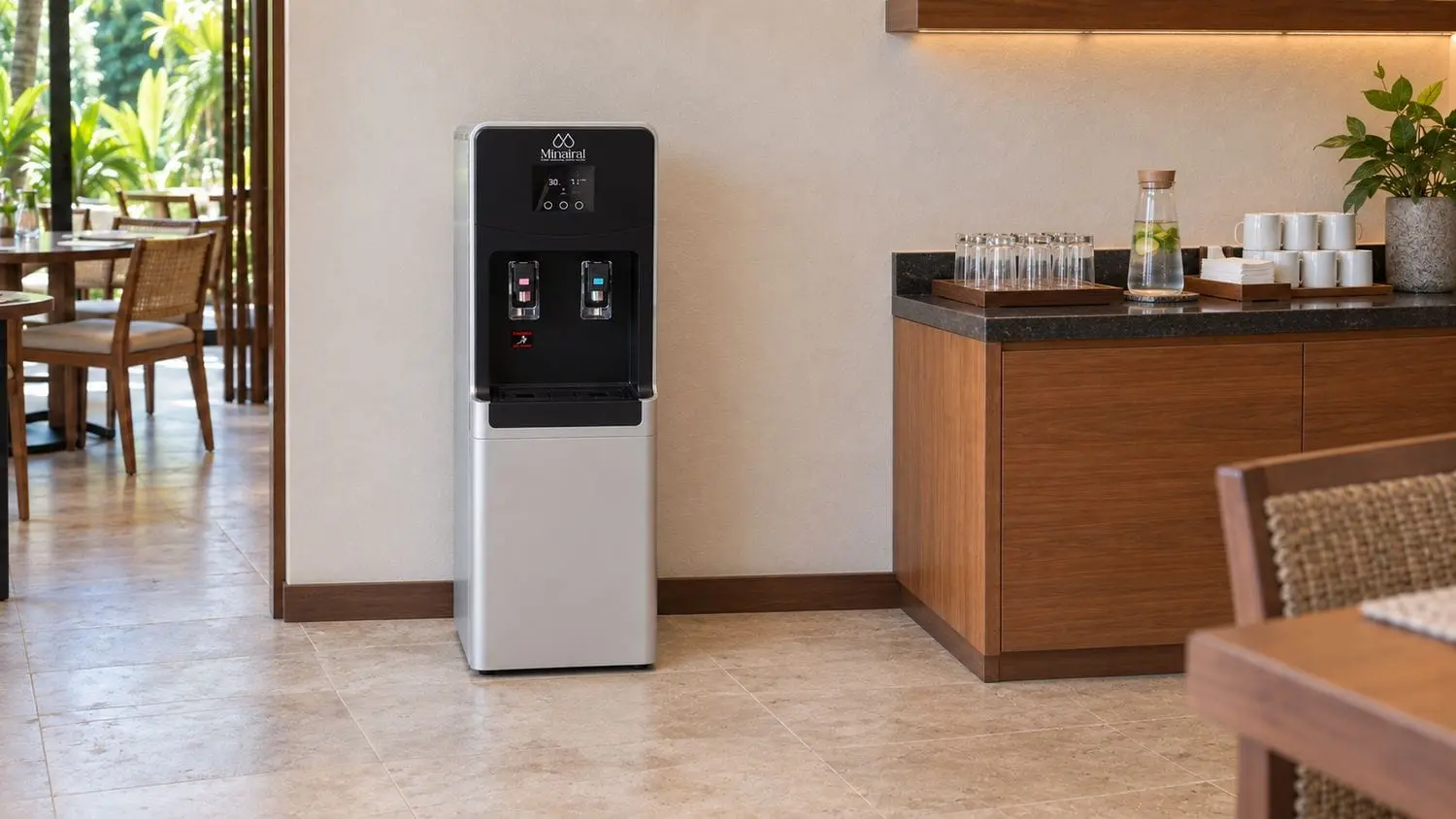
A restaurant water filtration system does two jobs at once. Water is an ingredient in the kitchen, in coffee, tea and cooking, and it is a product on every table. Both depend on the same source.
The recommended configuration.
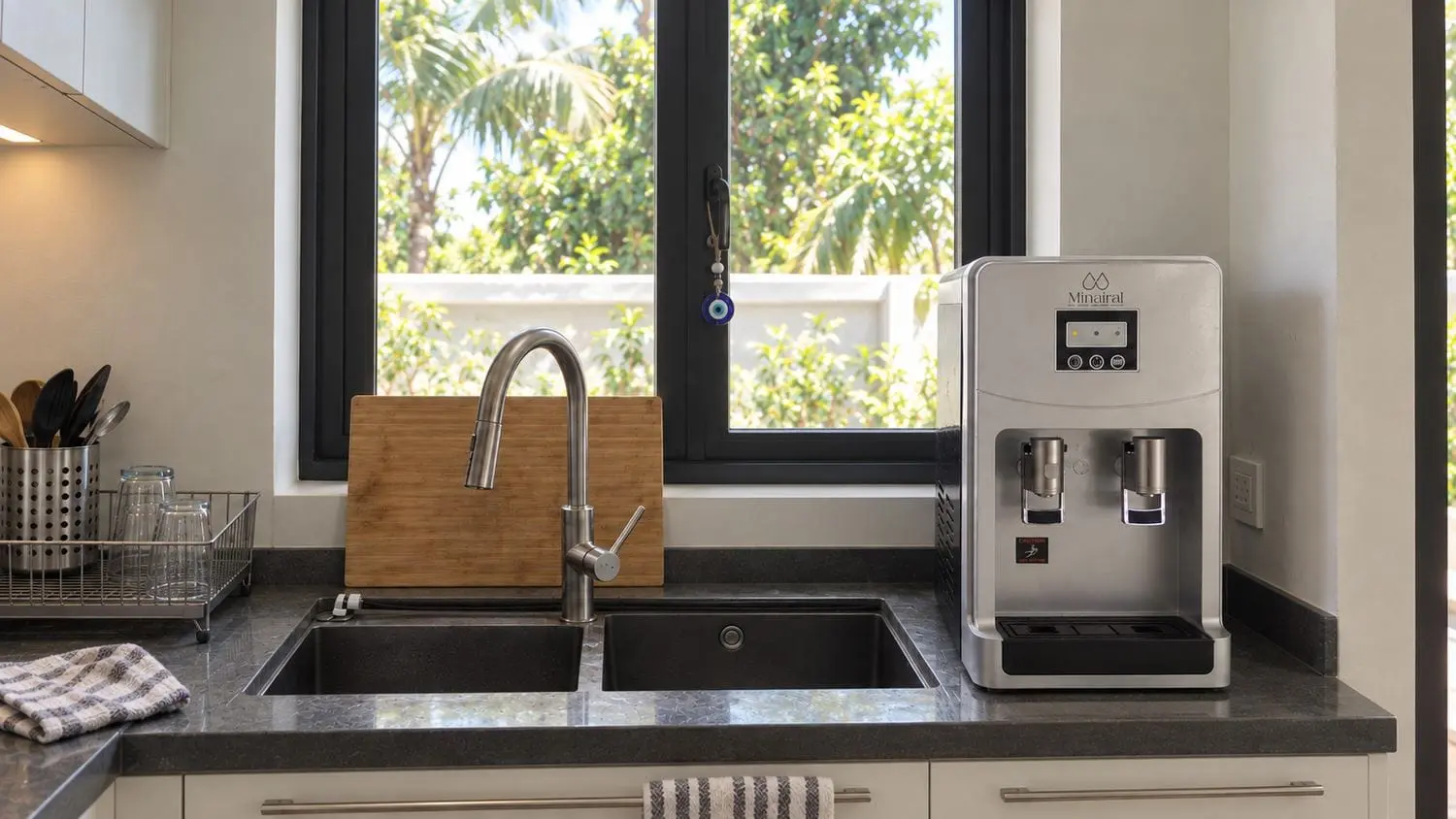
In most restaurants the water line is already in the kitchen, so Pure does the main work. Air covers the places the plumbing does not reach.
Air, beyond the plumbing.
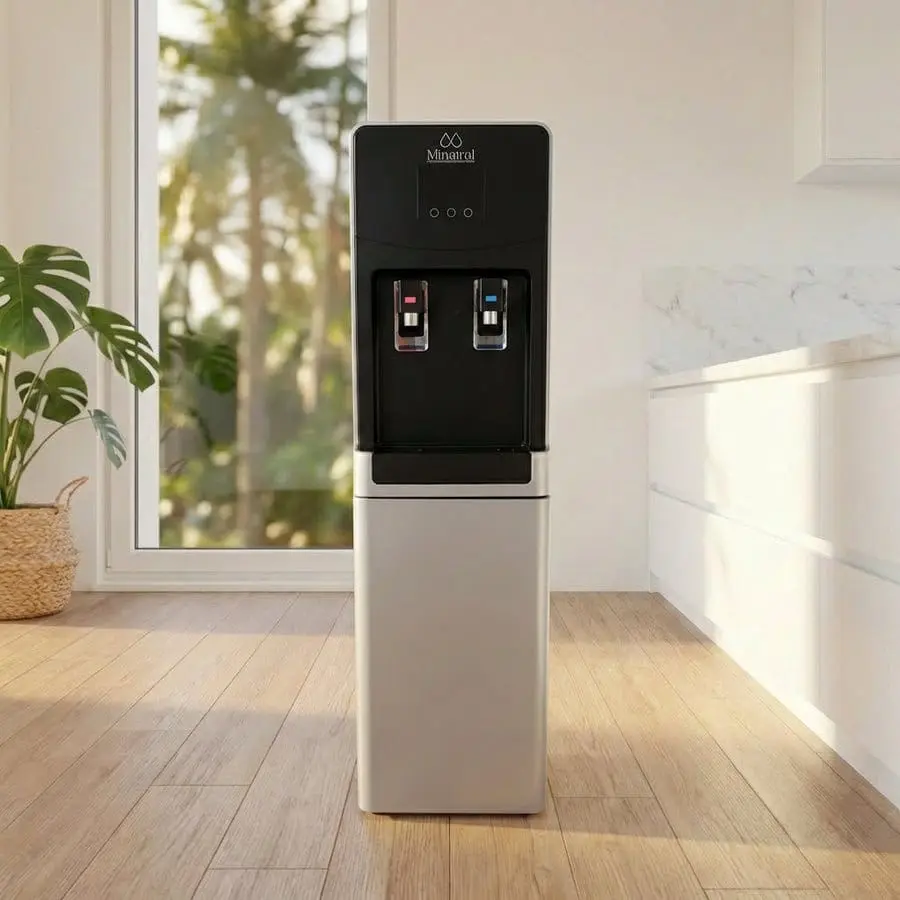
Air suits a terrace or dining room where no line runs, or a site where mains pressure drops at peak demand, as it does on some island networks. Output is an average daily figure, so the volume is checked against the number of covers at the assessment.
Explore the Air range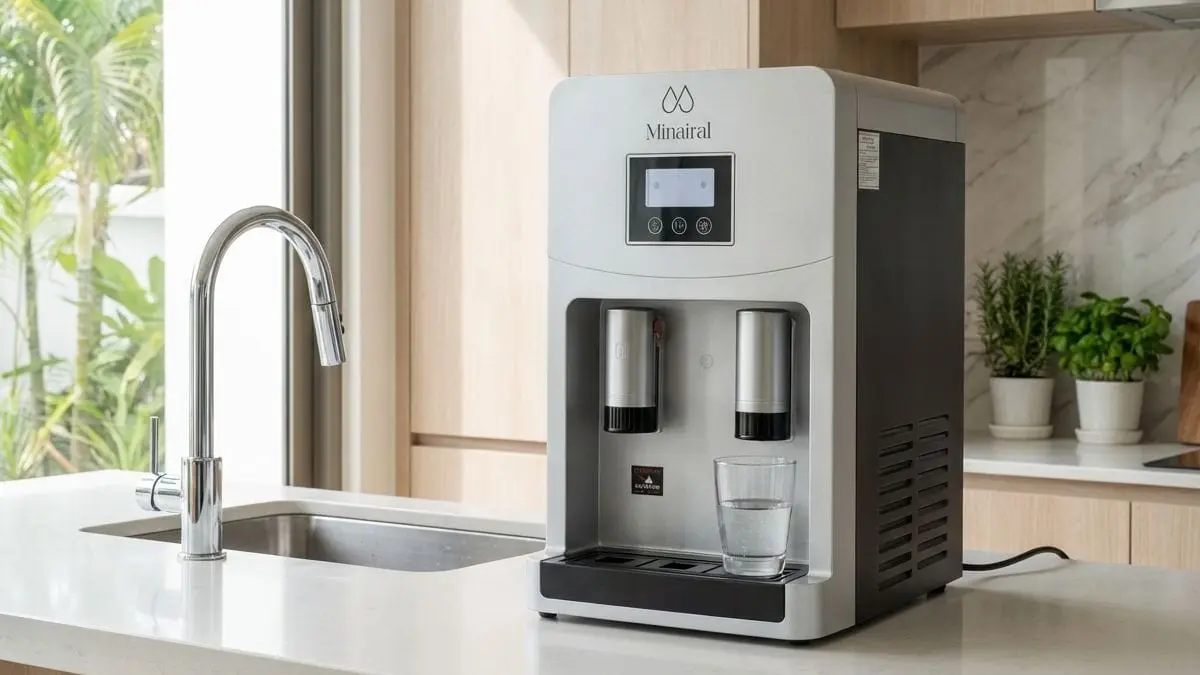
Pure, for the kitchen and the bar.
Five-stage reverse osmosis rated at 75 GPD, roughly 12 litres an hour, with post-carbon polishing, a Biocera mineral filter, and hot and cold delivery. Installed in under an hour, so it fits between two services.
Explore the Pure range
What the restaurant stops buying.
Two volumes count in a restaurant: the water the team drinks, and the water served to guests. The method published on this site, two litres per person per day over 365 days, applies to the team. Guest service is counted from what you serve today.
- Team
- 20 staff × 2 L × 365 days = 14,600 litres a year
- Team, in bottles
- 14,600 ÷ 0.5 L = 29,200 half-litre bottles a year
- Guests
- 100 half-litre bottles served a day × 365 = 36,500 bottles a year
- Total
- 65,700 single-use bottles a year, replaced by glass bottles refilled on site
Every bottle that is not bought is also one that is not delivered, stored, chilled and collected as waste. In a small restaurant, the store room it frees is often worth as much as the bottles.
Assumptions: 20 staff on site every day, 100 bottles served a day, 365 days of trading. Replace them with your own. The impact calculator applies the same method to the team.
From the kitchen to the table, in glass.
The optional 500 mL reusable glass bottle replaces the plastic bottle on the table. It can carry the restaurant logo alongside ours, and the label prints the mineral composition of the water.
Bottles are filled at the bar or service station between services. The guest sees a glass bottle with a label that says what is in it: calcium, magnesium, potassium and sodium, at an alkaline pH.
Service and maintenance.
Maintenance is planned in advance, Monday to Saturday, 9:00 to 18:00, and consumables are replaced on schedule. A fault gets a response in 4 hours on average.
- Filter schedule
- Sediment every 4 months on Pure, 6 on Air. Post-carbon, mineral and reverse osmosis every 12 months
- Response
- 4 hours on average
- Training
- Kitchen and bar staff trained on the machines installed
- Water checks
- TDS and pH during routine maintenance
- Parts
- Several hundred spare parts held in Thailand
A restaurant installation.
From the installations listed on the projects page. Client names are withheld at their request.
Restaurant questions.
Can a restaurant serve filtered water in glass bottles instead of bottled water?
Yes. A Pure or Air system produces filtered, remineralised water on site, and the optional 500 mL reusable glass bottle carries it to the table. The bottle can carry your logo alongside ours, with the mineral composition printed on the label.
Does the system need a water connection?
Pure connects to the existing water line, usually in the kitchen, and installs in under an hour. Air needs no water connection: the unit is plugged in and makes water from the humidity in the air.
Is the water hot enough for tea and coffee?
Pure systems deliver hot water at 90°C and cold water at 4°C. In the Air range, the Air Top and Air Stand deliver hot and cold, while the Air Stand Pro delivers cold only.
How much space does a system take in the kitchen?
Pure comes in countertop and floor-standing formats, with 7 L and 13 L stainless steel tanks. The format and position are decided at the site assessment, with the kitchen layout in front of us.
What does maintenance involve for the kitchen team?
Very little. Minairal technicians replace the pre-filter every 4 to 6 months depending on the system, the other cartridges every 12 months, and check TDS and pH during routine maintenance. Your team is trained on the machines installed and has a named local contact, in English and Thai.
Where we install.
Three service centres with parts in stock, in Koh Samui, Phuket and Hua Hin, and service coverage in Bangkok and Koh Phangan.
Other sectors.
Read further.
From the blog.
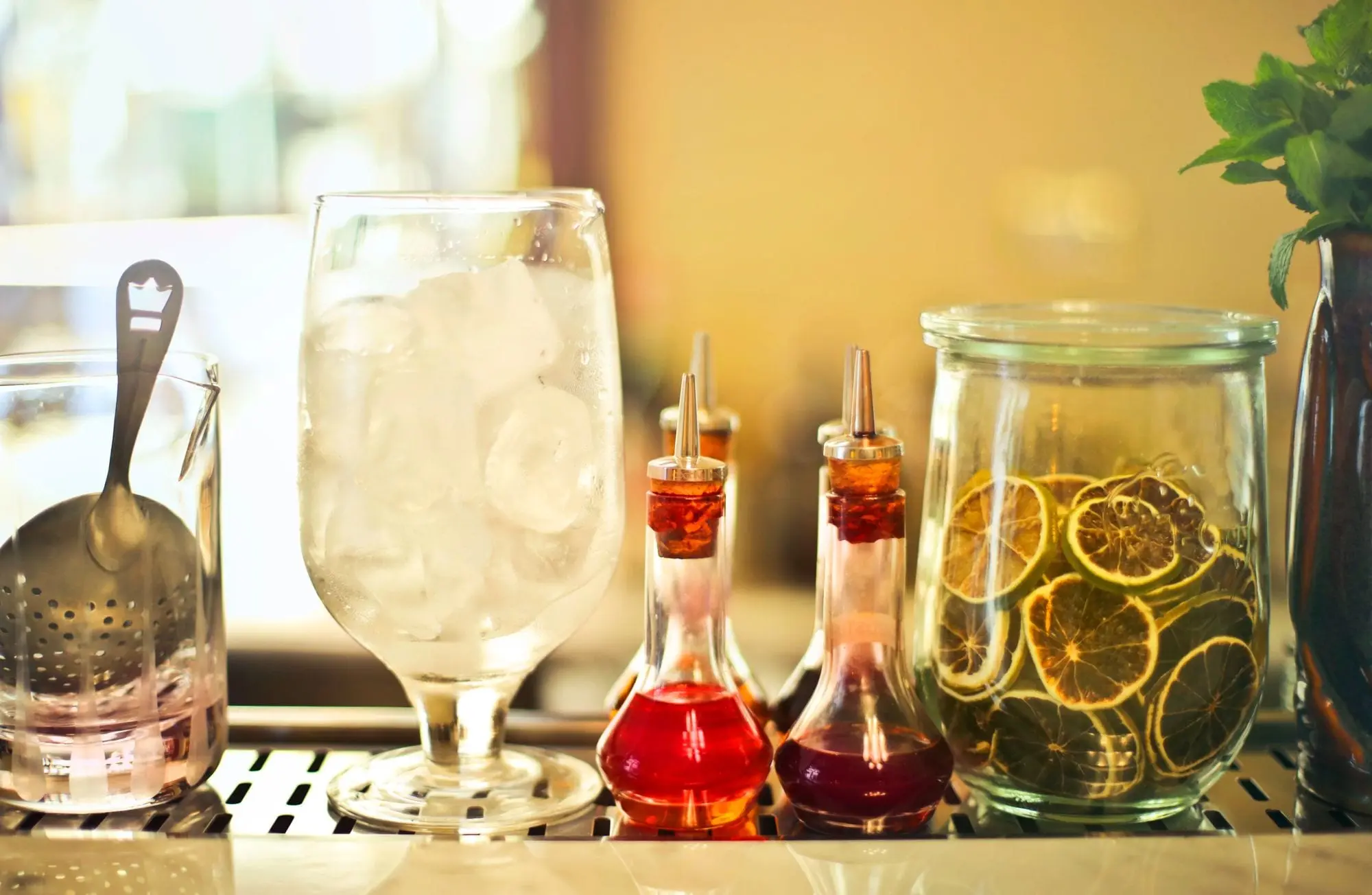
Soda Water for Restaurants and Bars: Sparkling Water Made on Site
How restaurants and bars in Thailand can serve sparkling water made on site: the still water system behind it, CO2 cost per litre, service and glass bottles.
Read the article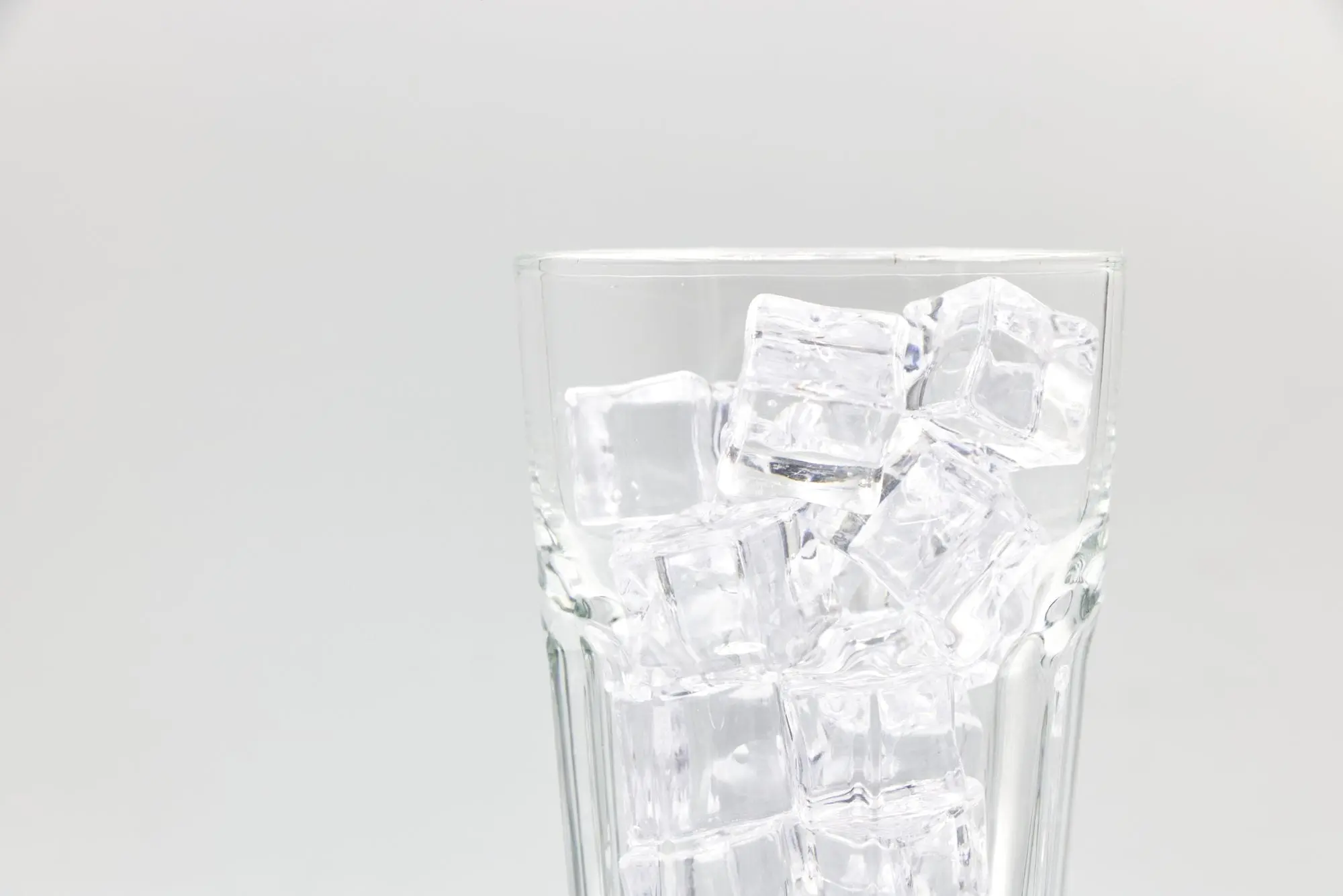
Is Ice Safe in Thailand?
Is ice safe in Thailand? Factory tube ice is made from treated water under Thai FDA rules. What to check in hotels, restaurants and street stalls.
Read the article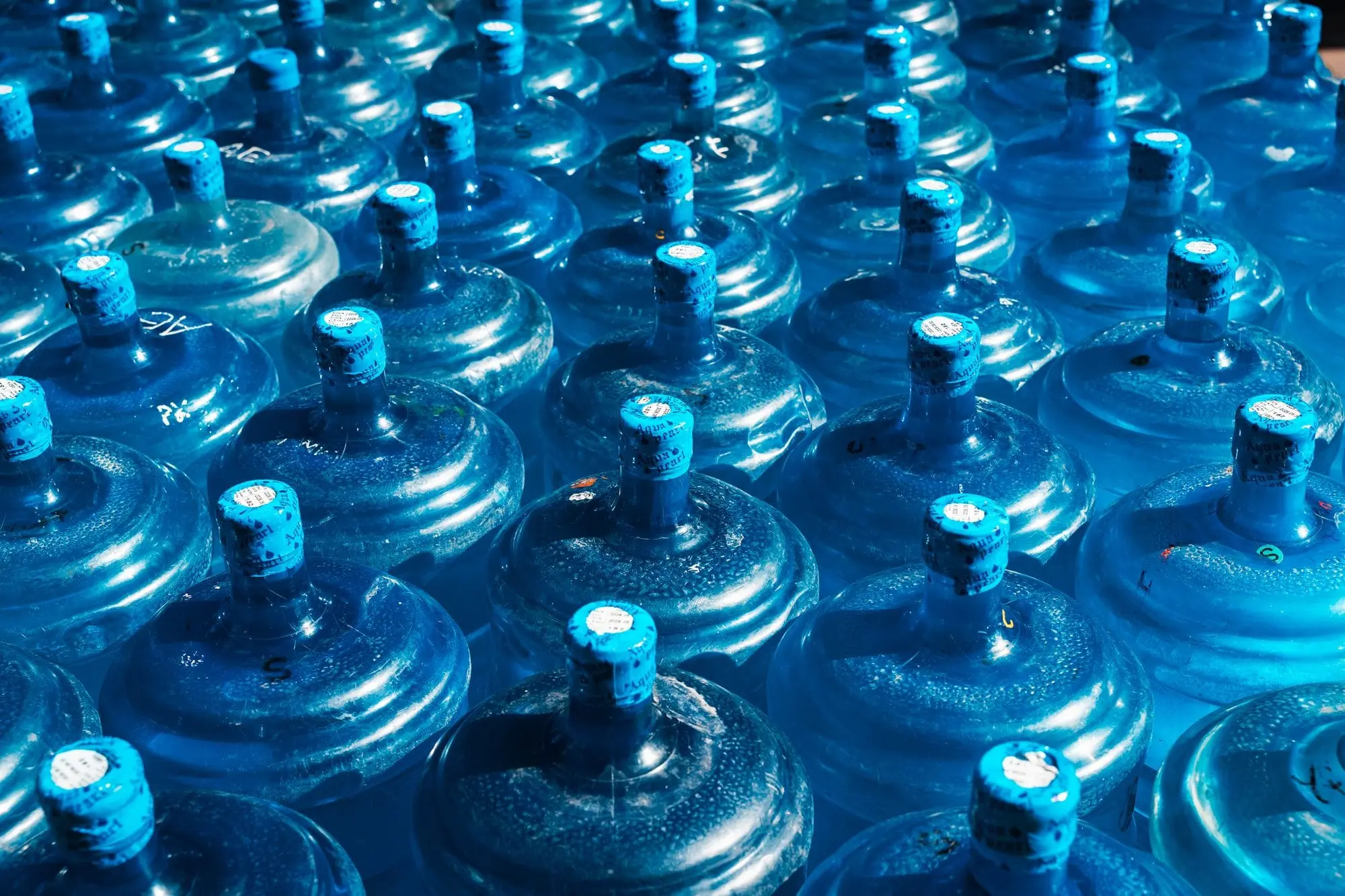
On-site water generation and fewer deliveries
What changes when the water is made where it is served.
Read the article
Tell us about the restaurant. We come back with a specification.
Covers per day, the kitchen layout, where the water line runs, and how water is served today. You receive a configuration, a capacity and a maintenance plan.