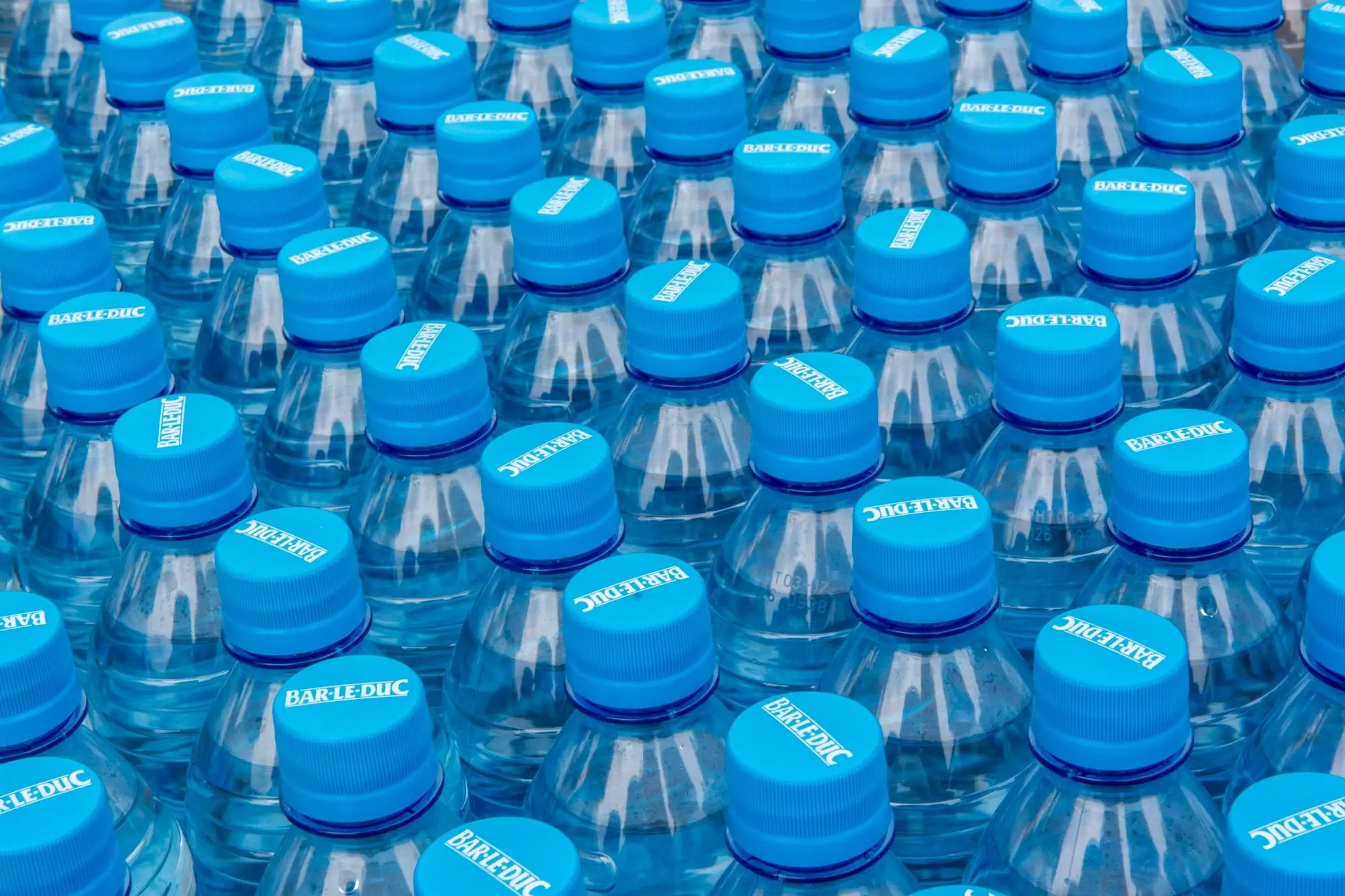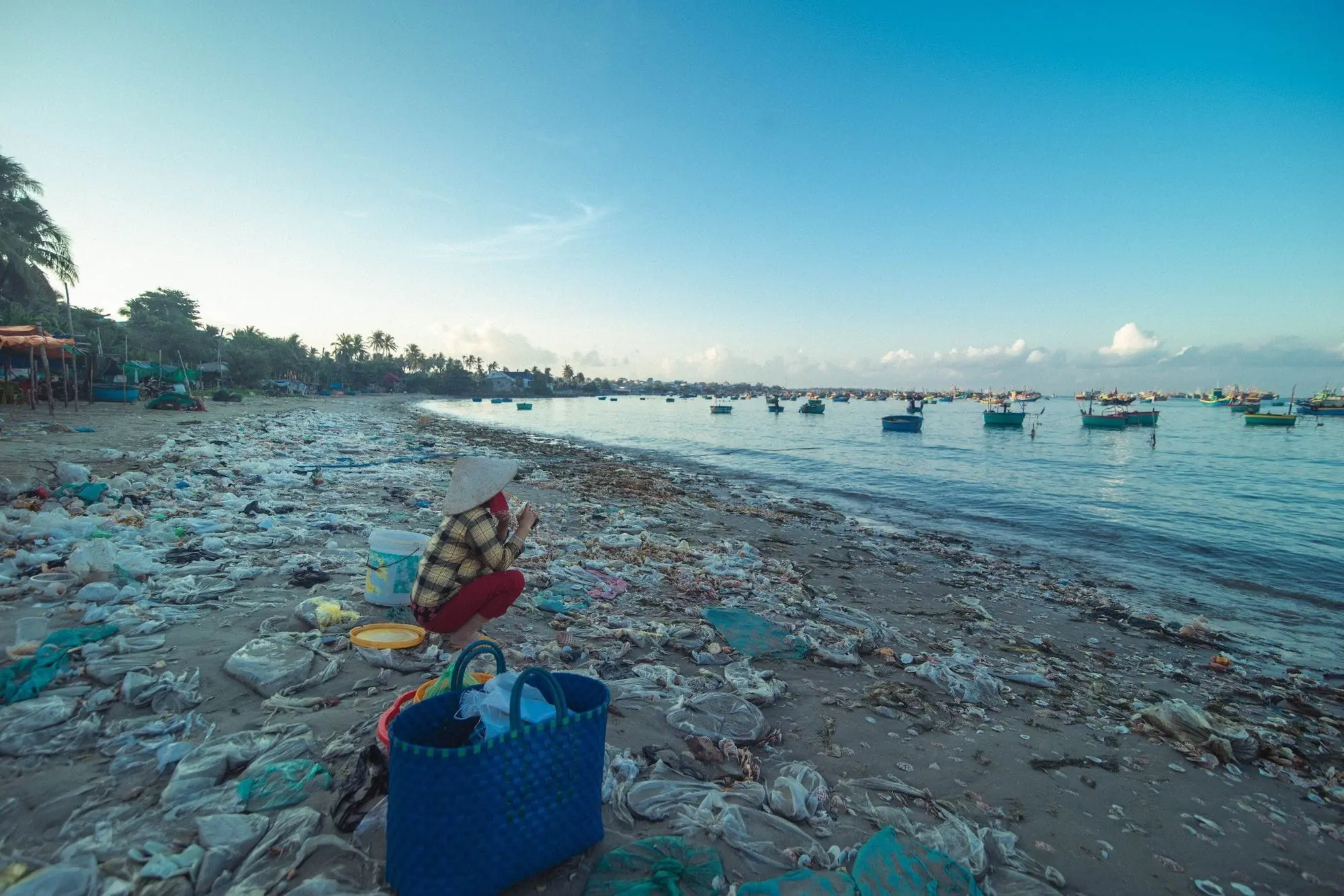
A hotel in Thailand cuts plastic bottles by producing its drinking water on site, serving it in reusable glass bottles in the rooms and from dispensers in public areas, giving housekeeping and restaurant staff a simple refill routine, and telling guests why. At two litres a day in 0.5 L bottles, each guest present every day accounts for 1,460 bottles a year, so a hotel with 150 people on site removes about 219,000 bottles and 2.2 tonnes of plastic a year.
How many plastic bottles does a hotel use?
Count the people on site, guests and staff, and multiply by four half-litre bottles a day. The table uses the assumptions published on this site: two litres per person per day, 10 g of plastic per 0.5 L bottle, and ฿13 per bottle, the average retail price for natural mineral water at Thai retailers in October 2026.
| People on site every day | Bottles a year | Plastic a year | Bottled water budget a year |
|---|---|---|---|
| 40 (small guesthouse) | 58,400 | 584 kg | ฿759,200 |
| 150 (50-room hotel) | 219,000 | 2,190 kg | ฿2,847,000 |
| 400 (resort) | 584,000 | 5,840 kg | ฿7,592,000 |
Run your own figures on the bottle quiz on our home page, which is pre-filled for a 150-person hotel and takes ten seconds to adjust. Many hotels buy at wholesale rather than retail, so the budget line is yours to edit; the bottle count does not change.
Where does the drinking water come from without bottles?
From a machine in the building. Two kinds exist. An atmospheric water generator condenses drinking water from humid air, needs a socket and no water line, and keeps working when the mains is rationed; Minairal's Air range makes 13, 16 or 22 L a day on average per unit. A reverse osmosis system such as the Pure range treats the existing line with 5-stage RO, remineralisation and UV-C, gives a stable volume while the line runs, and is installed in under an hour.
Both filter the water, protect it with UV and restore calcium, magnesium, potassium and sodium, so the water tastes like the mineral water guests expect. A hotel usually combines them: Pure where the plumbing is reliable, Air where there is no plumbing or the supply is uncertain.
How do you serve water in rooms without plastic?
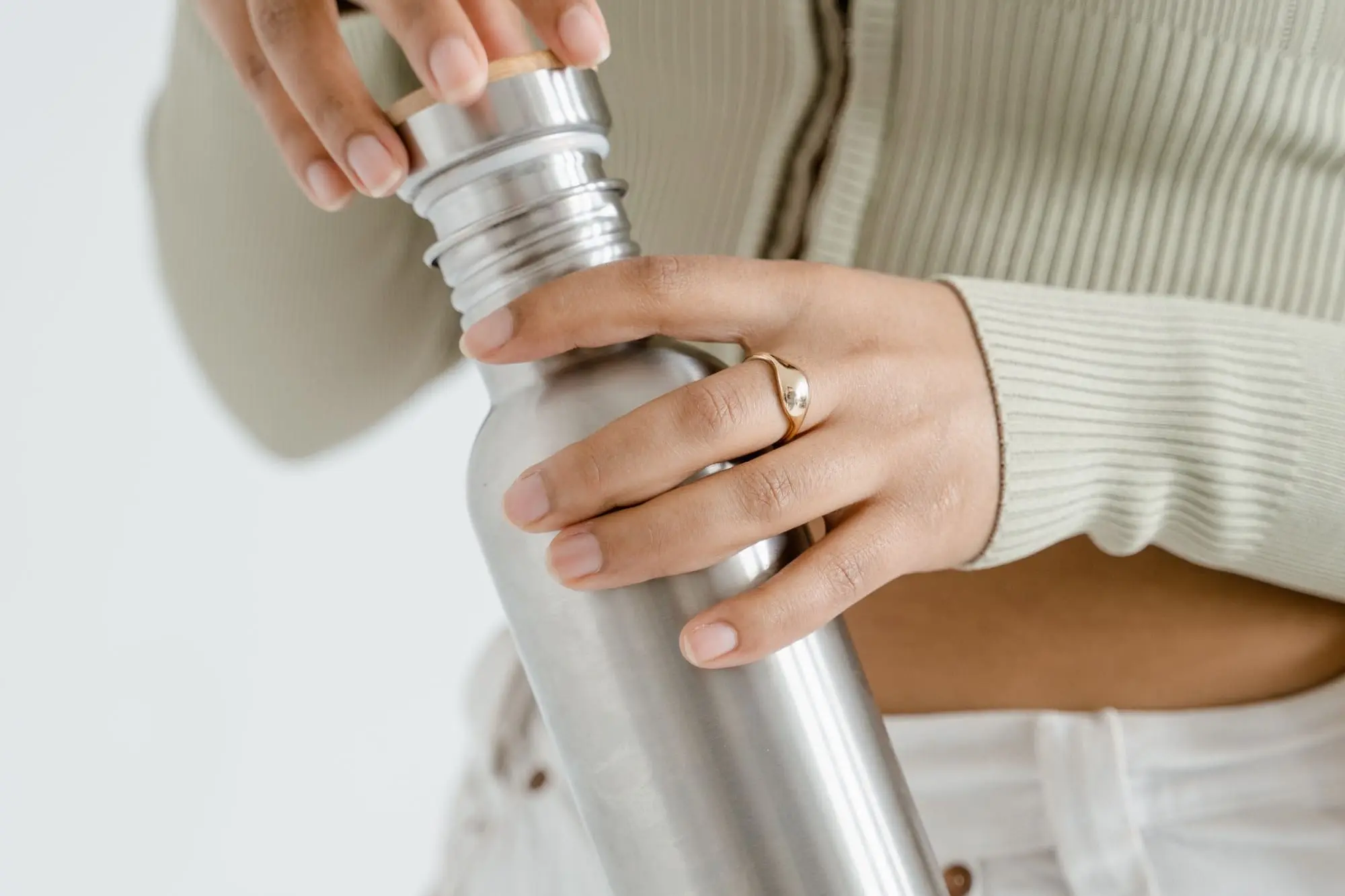
With a reusable 500 mL glass bottle filled in the housekeeping pantry. The routine is the same as for towels: a clean, sealed bottle goes in at turndown or at the morning service, the used one comes back on the trolley, and the pantry washes and refills it. Minairal supplies an optional glass bottle that can carry the hotel logo and prints the mineral composition of the water on its label.
Three details make this work. A pantry per floor, or per block in a resort, so that housekeeping never carries bottles far. A dishwasher cycle and a drying rack sized for the bottle count. And a seal, a paper collar or a cap sticker, so the guest sees the bottle was filled for them.
What goes in public areas?
- Lobby and reception. A floor-standing dispenser with glasses, or carafes refilled from it. Arriving guests notice it before they notice anything else.
- Restaurant and bar. Still water in carafes at every table, sparkling water made on site for guests who ask for it, and the system placed where the staff refill, not where guests queue.
- Pool and beach. A dispenser in the shade with reusable cups, replacing the cool box of plastic bottles.
- Gym and spa. A counter-top unit, because these are the rooms where guests used to take a bottle away.
- Staff canteen. Often forgotten, and often the largest single consumer of bottled water in the building.
How do you organise the staff?
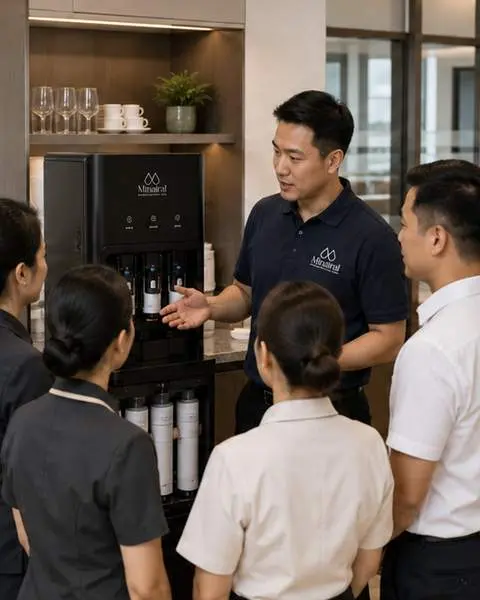
Give each department one task and one owner. Housekeeping owns the room bottles, from washing to sealing. The restaurant owns carafes and the bar owns sparkling water. Engineering owns the machines: the daily check that each one is producing, the tank levels, and the call to the technician. One hour of training at installation, given by the technicians who will service the machines, is enough for a 50-room hotel.
Keep a small bottled reserve, a few cases, for the day a unit is being serviced or an event doubles the headcount. Filters are changed by Minairal technicians on a fixed schedule, so the reserve is rarely touched.
How do you tell guests?
Briefly and factually. A card in the room says the water is produced in the hotel, filtered and remineralised, and served in glass to avoid plastic bottles. The label on the bottle shows the minerals. The website and the booking confirmation mention it in one line. Guests do not need a lecture on the planet; they need to know the water is safe and that the bottle in their room is for them.
Avoid claims you cannot show. Say how many bottles the hotel no longer buys, because you can count them, rather than describing the hotel as plastic free when the minibar still holds soft drinks in PET.
What does the switch cost and what does it save?
The costs are the machines, the glass bottles, the filters changed on schedule and the electricity. The savings are the bottled water budget in the table above, the delivery and storage of pallets, and the waste that no longer leaves the property. For a 150-person hotel buying at retail, the bottled budget alone is about ฿2.8 million a year. Business pricing follows a site assessment, because the number of machines depends on where water is actually drawn: the pantries, the restaurant, the pool and the staff canteen. The full set-up is described on our hotels and resorts page.
Frequently asked questions.
Do guests accept water that does not come in a sealed plastic bottle?
Yes, when the glass bottle is visibly clean and sealed and the card explains where the water comes from. The complaint hotels report is the opposite: guests asking why the hotel next door still hands out plastic.
Is water from a dispenser safe for guests?
Yes. The water is filtered, protected by UV and remineralised in the machine, and the filters are changed by technicians on a fixed schedule. The glass bottles are washed in the hotel's own dishwasher, as glasses and cutlery are.
How long does it take a hotel to make the switch?
A Pure system is installed in under an hour and an Air unit plugs into a socket, so the machines are the quick part. Allow two to four weeks for the bottles, the pantry routine and the staff training to settle, then run down the bottled stock.
To see how a unit fits in your pantry or lobby before deciding, request the free one-week trial.