Thailand Drinking Water Cost Index 2026.
A yearly data page on what people and businesses in Thailand pay to drink water: bottles, jugs and the tap, side by side, with the plastic that goes with each. Every figure comes with its source and its assumption, and the page is free to reuse with a link.
The figures in one glance.
Prices surveyed on 5 October 2026; public prices of Thai brands, delivered packs included, imported brands excluded. Consumption of two litres per person per day unless stated otherwise.
Ready to quote.
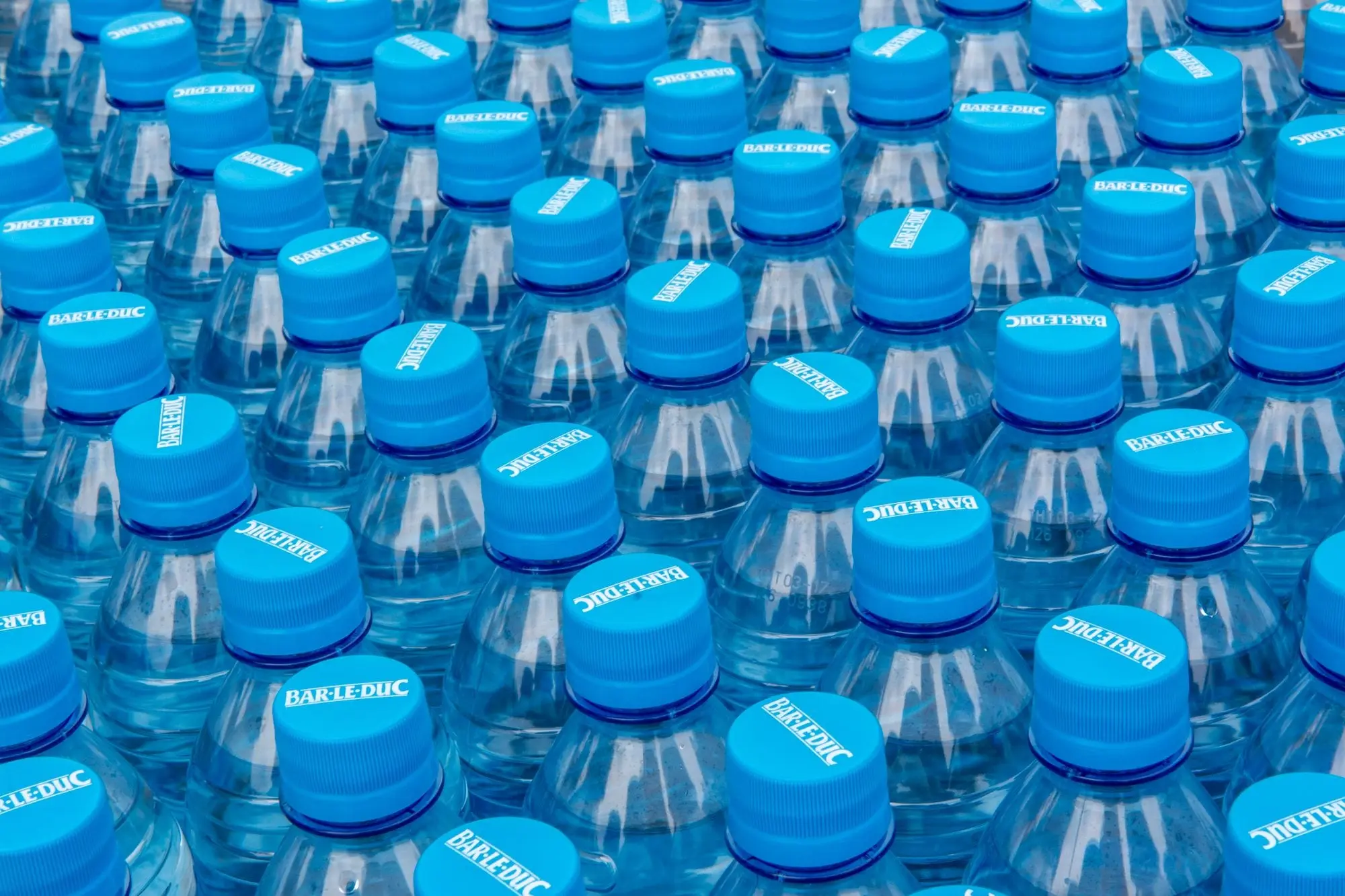
- In October 2026, a 0.5 L bottle of Thai bottled mineral water costs about ฿13 on average and a 1.5 L bottle about ฿23: between ฿15.3 and ฿26 per litre. Imported brands cost three to four times as much.
- A household of four in Thailand drinking two litres per person a day spends about ฿75,920 a year on 0.5 L bottled mineral water, about ฿44,770 in 1.5 L bottles, and about ฿3,074 on 19 L jug refills. The same water from the tap would cost about ฿30 at the first residential tariff tier, before any filtration.
- One person drinking two litres a day from half-litre bottles uses 1,460 bottles a year, about 15 kg of PET. A household of four uses 5,840 bottles, about 58 kg.
- A 30-room hotel giving two 0.5 L bottles per occupied room at 70% occupancy buys about 15,330 bottles a year, about ฿199,300 of bottled mineral water and 153 kg of plastic.
- Bangkok tap water is declared drinkable by the Metropolitan Waterworks Authority and was certified by the Department of Health in 2025. Nationally, 39.8% of household drinking water samples met the Department of Health criteria in 2023, and 21.9% of village water supplies tested between 2020 and 2024.
Updated 25 October 2026Free to reuse, in whole or in part, with a link to this page as the source (CC BY 4.0).Cite as: Thailand Drinking Water Cost Index 2026, Minairal, minairal.com.
Cost per litre, by format.
The same litre of water, from a half-litre bottle to the tap. Prices are typical public retail prices in Thailand; the basis of each is in the last column and in the method below.
| Format | Typical price | Per litre | Basis |
|---|---|---|---|
| Bottled mineral water, 0.5 L | ฿13 a bottle | ฿26 | Average of 19 public online prices of Thai brands (Minere, Aura, Mont Fleur, Purra and others), singles and packs |
| Bottled mineral water, 1.5 L | ฿23 a bottle | ฿15.3 | Average of 16 public online prices of the same brands |
| Purified drinking water, 0.6 L | ฿4.5 a bottle in a pack of 12, ฿7 single | ฿7.5 to ฿11.7 | Crystal, Singha, Nestlé Pure Life and Lotus's packs at ฿46 to ฿55; single bottle at the Ministry of Commerce recommended price |
| Purified drinking water, 6 L | ฿35 a bottle | ฿5.8 | One public listing (Lotus's own brand, Lotus's Shop Online) |
| 19 L jug, refill | ฿20 a refill | ฿1.1 | Minairal field price on the islands and the coast; no public list price exists. Deposit, delivery fees and the jug itself not counted |
| Tap water, mains | ฿10.2 per m³ | about ฿0.01 | Provincial Waterworks Authority residential tariff, first tier. Not treated for drinking at the tap outside the declared areas (see below) |
Baht per litre, by format.
- Bottled mineral water, 0.5 L฿26
- Bottled mineral water, 1.5 L฿15.3
- Purified drinking water, 0.6 L฿7.5
- Purified drinking water, 6 L฿5.8
- 19 L jug, refill฿1.1
- Tap water, mains฿0.01
Tap water is drawn at ฿0.01 per litre; at this scale its bar is a line. Bottled mineral water in 0.5 L bottles costs about 2,500 times the mains tariff.
In Thailand, "mineral water" (น้ำแร่ธรรมชาติ) is a regulated bottled category under the Ministry of Public Health notification on natural mineral waters: water from an underground source, bottled with limited treatment. Purified drinking water (Crystal, Singha, Nestlé Pure Life, Chang) is a separate, cheaper category. Water filtered and remineralised on site is a third category, "drinking water with minerals added", and is not mineral water.
What it costs a year, by profile.
Five profiles, each with its assumption stated. Costs use the typical prices above; change the price and the cost changes in proportion.
| Profile | Litres a year | 0.5 L bottles | 1.5 L bottles | 19 L jugs | Tap, mains tariff |
|---|---|---|---|---|---|
| One person 2 L a day, 365 days | 730 L | ฿18,980 | ฿11,190 | ฿768 | ฿7 |
| Household of four 2 L per person a day, 365 days | 2,920 L | ฿75,920 | ฿44,770 | ฿3,074 | ฿30 |
| Office of 20 people 1 L per person per working day, 250 days | 5,000 L | ฿130,000 | ฿76,670 | ฿5,263 | ฿51 |
| Café, 120 customers a day one 0.5 L bottle per customer, 360 days | 21,600 L | ฿561,600 | ฿331,200 | ฿22,740 | ฿220 |
| Hotel, 30 rooms two 0.5 L bottles per occupied room, 70% occupancy, 365 nights | 7,665 L | ฿199,300 | ฿117,500 | ฿8,068 | ฿78 |
Yearly spend on 0.5 L bottled mineral water, by profile.
- One person฿18,980
- Household of four฿75,920
- Office of 20 people฿130,000
- Café, 120 customers a day฿561,600
- Hotel, 30 rooms฿199,300
Profiles are illustrative. An office that also serves visitors, or a hotel that stocks minibars and restaurants, buys more than this.
Tap water is given for scale only: the mains tariff buys water for washing, and drinking it depends on the area and on the building, see what the authorities say. The jug column counts refills only, not the deposit, the delivery or the time spent handling 19 kg jugs.
Plastic per year.
Each format carries its own plastic: about 10 g of PET for a 0.5 L bottle, 28 g for a 1.5 L bottle, and about 15 g per fill for a 19 L polycarbonate jug reused fifty times.
By the Pollution Control Department's 2024 data, Thailand generates about 2.24 million tonnes of plastic waste a year and recycles or reuses 25.4% of it. Drinking water bottles are one part of that stream, and one of the few a household or a business can switch off entirely.
| Profile | 0.5 L bottles a year | PET, 0.5 L bottles | PET, 1.5 L bottles | Plastic, 19 L jugs |
|---|---|---|---|---|
| One person | 1,460 | 15 kg | 14 kg | 1 kg |
| Household of four | 5,840 | 58 kg | 55 kg | 2 kg |
| Office of 20 people | 10,000 | 100 kg | 93 kg | 4 kg |
| Café, 120 customers a day | 43,200 | 432 kg | 403 kg | 17 kg |
| Hotel, 30 rooms | 15,330 | 153 kg | 143 kg | 6 kg |
Kilograms of PET a year in 0.5 L bottles, by profile.
- One person15 kg
- Household of four58 kg
- Office of 20 people100 kg
- Café, 120 customers a day432 kg
- Hotel, 30 rooms153 kg
Weights are conservative industry averages (the method is below). Caps, labels, shrink film and secondary packaging are not counted.
Tap water: what the authorities say.
Thailand has two mains operators: the Metropolitan Waterworks Authority (MWA) in Bangkok, Nonthaburi and Samut Prakan, and the Provincial Waterworks Authority (PWA) elsewhere, plus about 70,000 village water supplies run by local administrations. The picture differs by area, and by what happens between the treatment plant and the glass.
The MWA states that its tap water is clean, safe and drinkable, produced to World Health Organization guidance, with free chlorine kept at 0.2 mg/L or more in the pipes. In July 2025 the Department of Health certified MWA water as drinkable after sampling across its 18 branches, which serve more than 12 million people. The MWA's own advice adds the condition that matters in practice: building pipes and storage tanks must be sound and clean, with tanks washed every six months.
Outside Bangkok, the PWA and the Department of Health have run a "drinkable tap water" programme since 2000. The PWA page lists 263 declared areas and 122 public drinking kiosks nationwide. The declaration covers the water leaving the network at those sites; it does not cover a hotel's roof tank or a condominium's pipes.
Nationally, the Department of Health's surveillance tells a different story. 39.8% of household drinking water samples met its drinkable tap water criteria in 2023, down from 51.5% in 2017. Among village water supplies tested between 2020 and 2024, 21.9% met the standard, and coliform bacteria were found in 58% of samples. This is why most households and businesses in Thailand still buy their drinking water.
| Area | What the public sources show |
|---|---|
| Bangkok, Nonthaburi, Samut Prakan (MWA) | Declared drinkable by the MWA; Department of Health certificate, July 2025. Monthly water quality reports are published. Condition: clean building tanks and pipes. |
| Chiang Mai (PWA) | Nine drinkable-water sites listed in the province, six of them in Mueang Chiang Mai (temples, parks, the Three Kings Monument). |
| Pattaya and Chon Buri (PWA) | One site listed in the province, a school in Ban Bueng. None in Pattaya. |
| Hua Hin and Prachuap Khiri Khan (PWA) | Eight sites listed in the province, in Pran Buri, Bang Saphan and Mueang Prachuap. None in Hua Hin. |
| Koh Samui, Koh Phangan and Surat Thani (PWA) | Five sites listed, all on the mainland (Tha Chana, Wiang Sa, Phrasaeng, Ban Ta Khun). None on the islands. |
| Phuket (PWA) | No drinkable-water site listed. |
| Krabi (PWA) | No drinkable-water site listed. |
A site that is not listed is not necessarily unsafe, and a listed one does not guarantee the tap in a given building. For the practical picture by province, read is tap water safe to drink in Koh Samui and Thailand.
Method.
How the figures are built, so that anyone can check them or redo them with their own prices.
- Bottled mineral water prices: public online prices collected on 5 October 2026 from Lotus's Shop Online, Tops Online, Makro PRO and OfficeMate (through the price aggregator Priceza) and from ALL ONLINE 7-Eleven. Only natural mineral water of Thai mass-market brands is kept (Minere, Aura, Mont Fleur, Purra, 7 Select, Royal Project, Sixty Degree, Lotus's own brand): 19 price points for 0.5 L (average ฿12.75, median ฿12, from ฿5.93 to ฿21.50) and 16 for 1.5 L (average ฿22.57, median ฿19.58, from ฿11.13 to ฿46). Pack prices are divided by the number of bottles, free bottles included. The averages are rounded to ฿13 and ฿23. Imported brands (Evian, Volvic, Vittel, Fiji, Acqua Panna: ฿40 to ฿63 for 0.5 L) are excluded, as they would triple the average.
- Purified drinking water: public listings read on 25 October 2026 on Priceza for 600 mL packs of 12 (Crystal ฿54, Singha ฿55, Nestlé Pure Life ฿55, Lotus's ฿46 at Lotus's Shop Online) and for the Lotus's 6 L bottle (฿35). The single-bottle price of ฿7 is the recommended retail price for 500 to 600 mL drinking water set by the Ministry of Commerce in 2015 (฿10 chilled). In March 2026, producers raised the wholesale price of a 12-pack of 500 mL from ฿20 to ฿25.
- 19 L jugs: ฿20 a refill is the price Minairal pays and sees on the islands and the coast in 2026; there is no public list price for delivered jugs. Deposit, delivery fees and the jug are not counted.
- Tap water: the Provincial Waterworks Authority residential tariff, first tier (0 to 10 m³ a month), ฿10.2 per m³, the same in the three PWA tariff tables (Phuket, Koh Samui and Koh Phangan included). Business tiers are ฿16 to ฿18.50 per m³. It is a price for mains water, not for water treated to be drunk at the tap.
- Consumption: two litres per person per day, every day of the year, the assumption used across this site. The office profile uses one litre per person per working day over 250 days; the café profile one 0.5 L bottle per customer, 120 customers a day, 360 days; the hotel profile two 0.5 L bottles per occupied room, 30 rooms at 70% occupancy, 365 nights.
- Plastic: 10 g of PET for a 0.5 L bottle (industry average of 9 to 12 g), 28 g for a 1.5 L bottle, 60 g for a 6 L bottle, and 15 g per fill for a 19 L polycarbonate jug of about 750 g reused fifty times. Caps, labels and film are not counted.
- Costs are rounded to three significant figures above ฿10,000. The ratio between bottled and tap water is rounded to the nearest hundred.
Sources.
- Price survey, bottled mineral water, 5 October 2026: priceza.com (Lotus's Shop Online, Tops Online, Makro PRO, OfficeMate) and allonline.7eleven.co.th.
- Purified drinking water listings, 25 October 2026: Priceza, 600 mL packs of 12 and Priceza, 6 L.
- Ministry of Commerce, recommended retail price of 500 to 600 mL drinking water (฿7, ฿10 chilled), 15 July 2015: Thai PBS. Wholesale increase from ฿20 to ฿25 a pack, 22 March 2026: Thai PBS.
- Provincial Waterworks Authority, water tariff tables: pwa.co.th.
- Provincial Waterworks Authority, drinkable tap water areas and kiosks (263 areas, 122 kiosks): pwa.co.th. PWA and Department of Health agreement, programme since 2000, 6 September 2024: Thairath.
- Metropolitan Waterworks Authority, questions and answers on water quality (drinkable, WHO guidance, residual chlorine, tank cleaning): mwa.co.th. Monthly water quality reports: mwa.co.th.
- Department of Health certificate to the MWA, 25 July 2025 (18 branches, more than 12 million people): Daily News; follow-up with the six-month tank cleaning advice, 24 February 2026: Daily News.
- Department of Health, drinkable tap water quality criteria B.E. 2563 (2020): foodsan.anamai.moph.go.th. Surveillance results, household drinking water 2014 to 2023 and village water supplies 2020 to 2024: Department of Health indicator report, fiscal year 2025 (PDF).
- Pollution Control Department, plastic waste 2024 (2.24 million tonnes a year, 25.4% recycled or reused), as reported on 5 June 2025: Daily News; department site: pcd.go.th.
- Ministry of Public Health Notification No. 454 (B.E. 2567) on natural mineral waters: food.fda.moph.go.th.
- Bottle weights: International Bottled Water Association, average PET bottle weight: bottledwater.org.
This index is published once a year by Minairal, a Thai company that installs drinking water systems. The figures are independent of its products: no Minairal price appears here, and the prices surveyed are those of bottled water on sale in Thailand. Reuse is free with a link to this page; corrections and additional public price points are welcome at info@minairal.com.
Questions about the index.
Short answers on how to read and reuse the figures.
How much does bottled water cost per litre in Thailand in 2026?
Between ฿15.3 and ฿26 per litre for Thai bottled mineral water (฿23 for 1.5 L, ฿13 for 0.5 L), ฿7.5 to ฿11.7 per litre for purified drinking water in 0.6 L bottles, about ฿5.8 per litre in 6 L bottles, and about ฿1.1 per litre for a 19 L jug refill at ฿20.
How much does a family spend on drinking water in Thailand each year?
At two litres per person per day, a household of four spends about ฿75,920 a year on 0.5 L bottled mineral water, about ฿44,770 in 1.5 L bottles, about ฿21,900 in 0.6 L purified water packs, and about ฿3,074 on 19 L jug refills.
Is tap water in Thailand safe to drink?
The MWA declares Bangkok tap water drinkable and the Department of Health certified it in 2025, on condition that building tanks and pipes are clean. Elsewhere, the PWA lists 263 declared drinkable areas. Nationally, 39.8% of household drinking water samples met the Department of Health criteria in 2023. Most households and businesses still buy or treat their drinking water.
Can I reuse these figures or charts?
Yes. The index is free to reuse, in whole or in part, with a link to this page as the source (CC BY 4.0). Please keep the date of the survey and the assumptions with the figures.
Why are imported mineral water brands excluded from the average?
Evian, Volvic, Vittel, Fiji or Acqua Panna sell at ฿40 to ฿63 for 0.5 L in Thailand, three to four times the Thai brands. Including them would triple the average and no longer describe what most people buy. They are listed in the method for reference.
How often is the index updated?
Once a year, with the survey date shown at the top of the page. The current edition is 2026, prices surveyed on 5 October 2026 and updated on 25 October 2026.
The alternative the index does not price.
One option is missing from the tables because it has no price per litre: producing drinking water where it is drunk, either by filtering the water line and adding minerals back or by condensing it from the humidity in the air. Its cost is a machine, electricity and scheduled filter changes, bought or rented, and it removes the bottles, the jugs and the deliveries from the figures above. It is the option Minairal installs, and the reason this index exists.
Related pages.
From the blog.
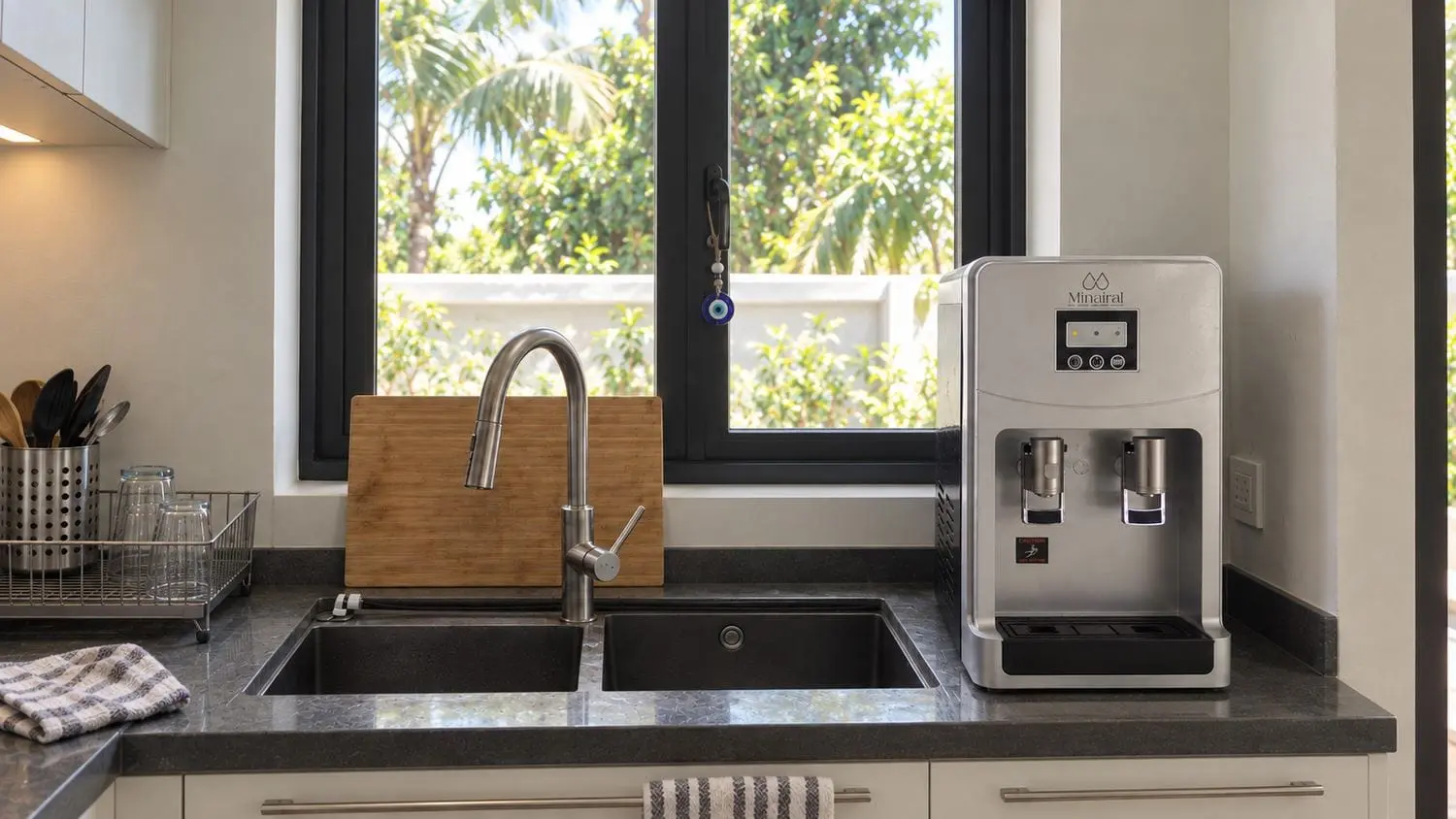
Mineral water in Thailand: brands, prices and the bottle-free alternative
Mineral water in Thailand costs about 13 baht per 0.5 L and 23 baht per 1.5 L. What the word means, the brands sold, and the on-site alternative.
Read the article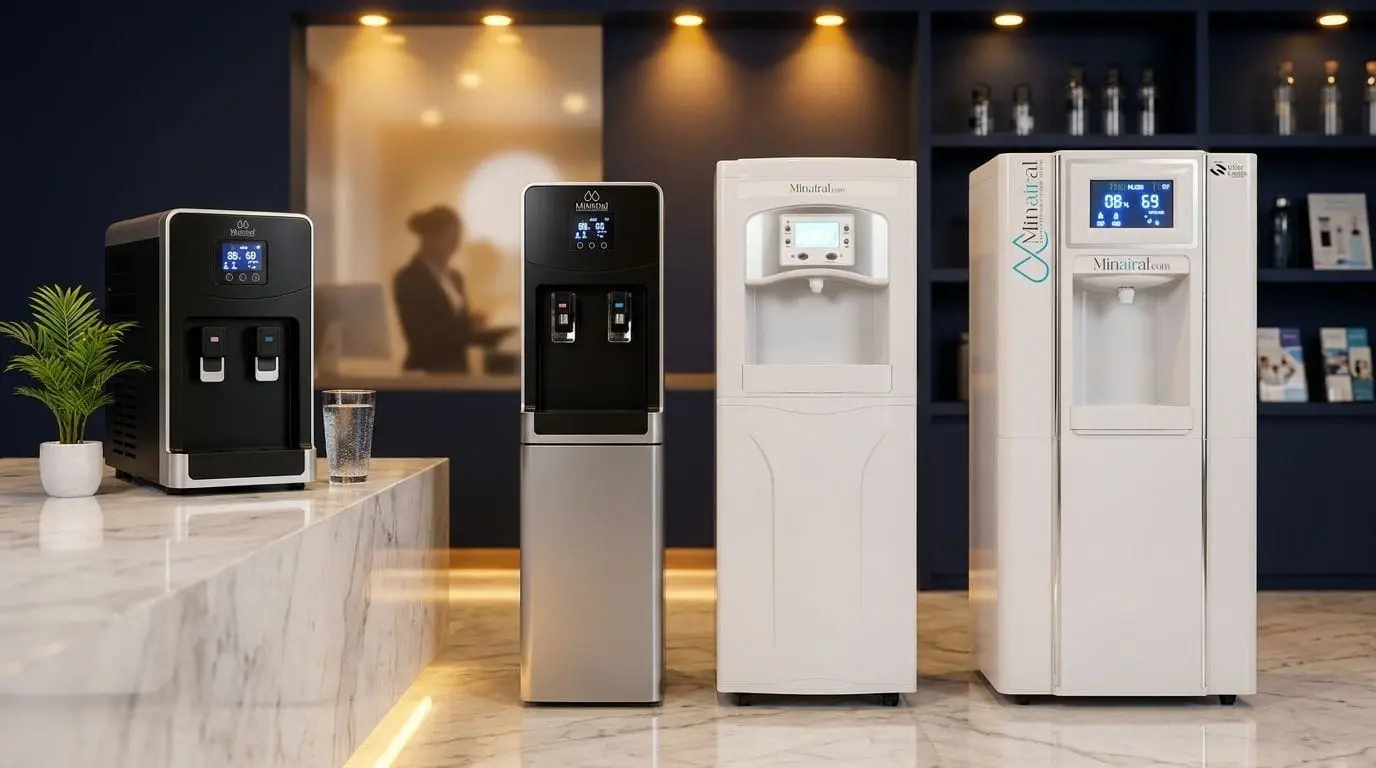
Air water generator price in Thailand
What drives the cost, what bottled water really costs, and total cost of ownership.
Read the article
Plastic water bottles and pollution
The environmental cost of single-use bottles and the greener alternatives.
Read the article