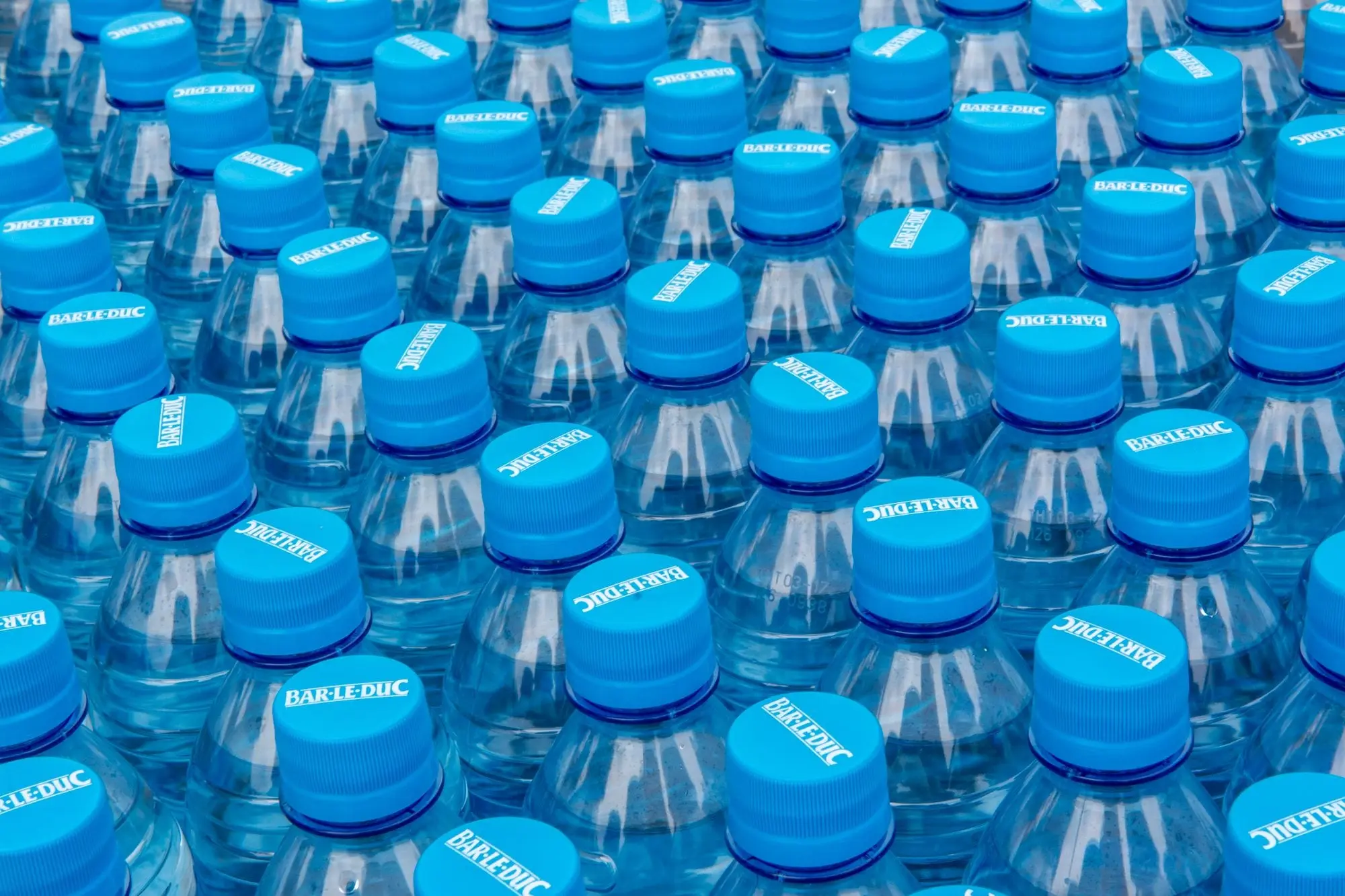
Microplastics are present in most bottled water. A 2018 study led by the State University of New York tested 259 bottles from 11 brands in 9 countries, including Thailand, and found plastic particles in 93% of them, at an average of 325 particles per litre.
A 2024 study from Columbia and Rutgers universities, using a laser method that sees much smaller particles, counted about 240,000 particles per litre in three bottled water brands, about 90% of them nanoplastics. Both studies point to the bottle and the cap as the main source.
What this means for your health is not settled. The World Health Organization reviewed the evidence in 2019 and judged the risk at current levels to be low, while calling for better data. This article sets out what the studies actually found, where the plastic comes from and what you can do about it, without overstating the science.
What did the 2018 bottled water study find?
The research, commissioned by the journalism organisation Orb Media and carried out at the State University of New York at Fredonia, is the largest survey of its kind. It used a fluorescent dye that binds to plastic and counted particles under a microscope.
- 259 bottles, 11 brands, 19 locations in 9 countries, Thailand among them.
- 93% of bottles contained microplastics; only 17 bottles were free of them.
- An average of 10.4 particles per litre larger than 100 micrometres, and 325 per litre when particles between 6.5 and 100 micrometres were included.
- Counts ranged from zero to around 10,000 particles per litre in individual bottles.
- Polypropylene, the material of most caps, was the most common polymer found.
The study was not peer reviewed, and two bottling companies questioned the dye method. It was, however, consistent with the same team's earlier tap water survey, in which bottled water carried roughly twice as many particles as tap water.
What did the 2024 nanoplastics study add?
In January 2024 researchers at Columbia University and Rutgers University published a peer-reviewed study in the Proceedings of the National Academy of Sciences. They used a technique called stimulated Raman scattering microscopy, which identifies particles down to about 100 nanometres and names the polymer.
Across three unnamed brands, they counted between 110,000 and 400,000 particles per litre, with an average near 240,000. About 90% were nanoplastics, far smaller than anything the 2018 study could see. Seven polymers were identified, including PET from the bottle itself, polyamide, which the authors linked to filters used in production, and polystyrene. The lead authors said much of the plastic appeared to come from the bottle and from the filtration process.
Does Thai bottled water contain microplastics too?
Yes. Thailand was one of the nine countries sampled in 2018. In 2023 a team at Chulalongkorn University's Environmental Research Institute tested bottled water produced in Thailand in several sizes and container types, looking at particles from 5 micrometres to 5 millimetres. They found microplastics in the samples and identified them as the same polymers as the bottle and the cap, which again points to the packaging rather than the water source.
Thailand's bottled water standard, Ministry of Public Health Notification No. 61, sets limits for minerals, metals and bacteria. Like every national standard today, it has no limit for plastic particles, because there is no agreed method to measure them.
Is this dangerous for your health?
The honest answer is that nobody knows yet. The WHO's 2019 report on microplastics in drinking water concluded that, on the limited evidence available, particles larger than 150 micrometres are unlikely to be absorbed by the body and the health risk at current levels appears low. It did not recommend routine monitoring and asked for research on smaller particles and on the chemicals they carry. A later note in the journal Environment International stressed that the report did not declare microplastics safe, only that the evidence was thin.
The 2024 study moved the question to nanoplastics, which are small enough to cross into cells. Its authors said plainly that it is not yet known whether this is harmful or how harmful. We do not make health claims about plastic particles, and we suggest being wary of anyone who does, in either direction.
Where do the particles come from, and how do you drink fewer?
Three sources dominate: the bottle wall, the cap, and the filling and filtration equipment. Heat, sunlight, squeezing and repeated opening all shed more particles. That gives a simple order of priorities.
| Habit | Effect on plastic particles |
|---|---|
| Keep bottles out of heat and sun | Fewer particles shed from the wall |
| Avoid reusing single-use bottles | Less abrasion and ageing of the plastic |
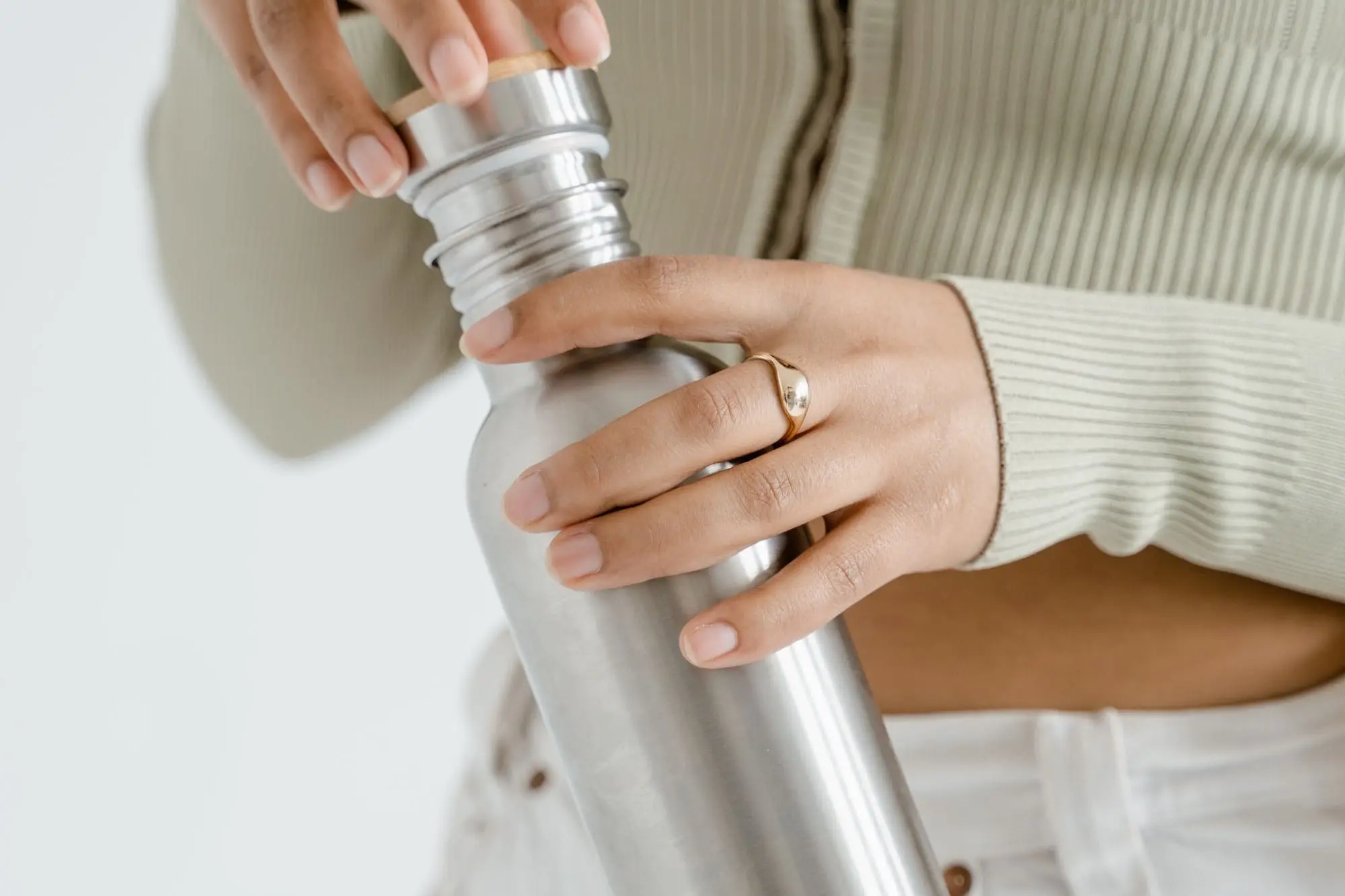
| Prefer glass or stainless steel for storage | No plastic wall to shed |
| Filter tap water at the point of use | RO membranes and fine filters remove particles down to well below a micrometre |
| Make drinking water on site | No bottle, no cap, no transport |
Filtering at the point of use does most of the work. A reverse osmosis membrane has pores far smaller than any microplastic and removes nanoplastics along with dissolved solids. Our water quality page explains what the Pure and Air systems do to the water before it reaches the glass, and the Air range makes water from humidity in the room, so no bottle or pipe is involved at all.
What does this mean for a hotel, an office or a school?
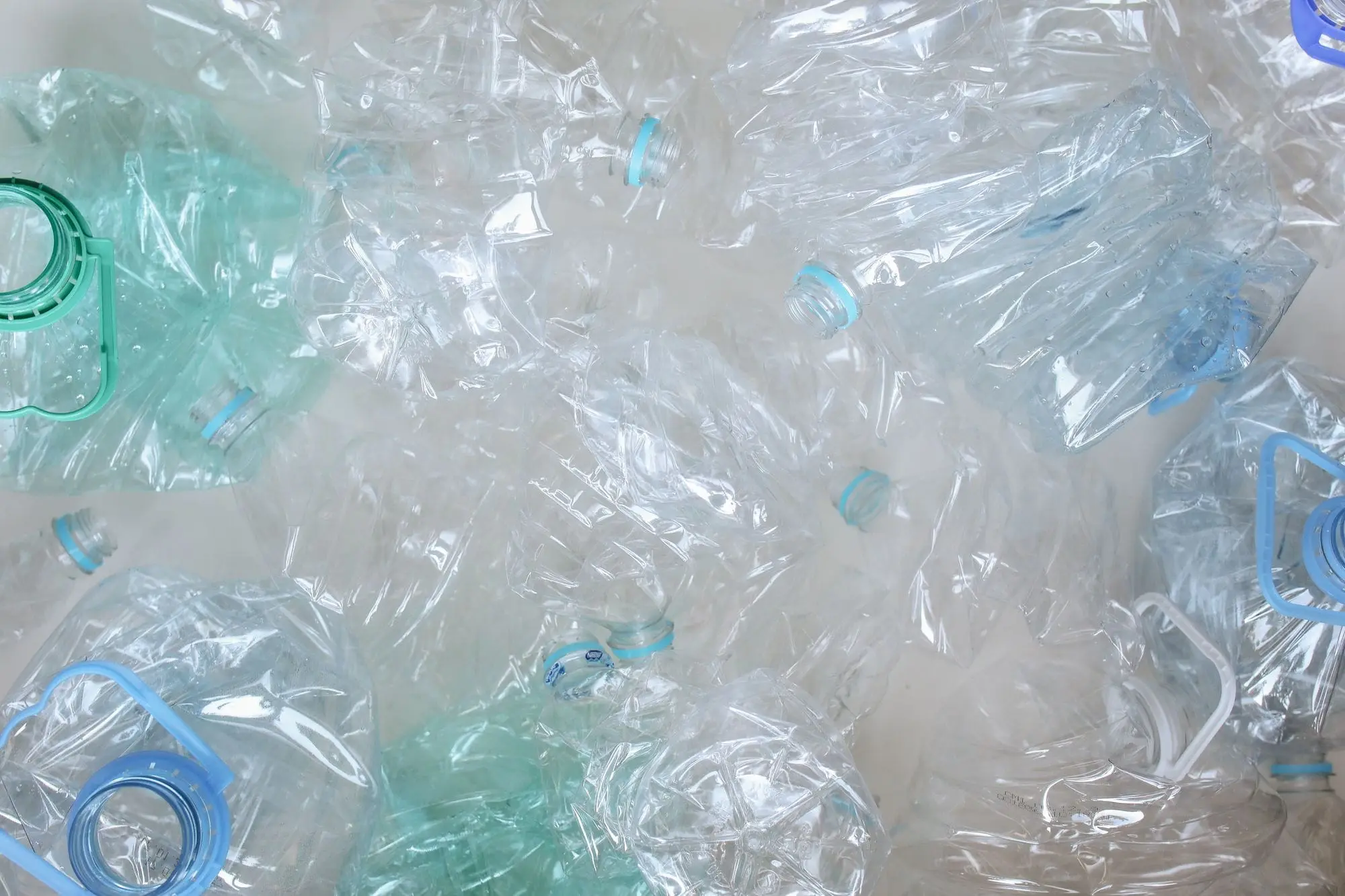
A single site can serve hundreds of bottles a day. One person drinking two litres a day from half-litre bottles uses 1,460 bottles a year; a site of fifty people, 73,000. Every one of those bottles carries the particles above and ends as waste. Our bottle calculator shows the figure for your own site. Switching to water made on site, served in glass or in refillable steel bottles, removes the packaging as the source and the plastic as the waste in one move, which is the same reason it cuts cost. Our sustainability page sets out the numbers.
Frequently asked questions.
Does all bottled water contain microplastics?
Nearly all of it, in the studies published so far. The 2018 survey found particles in 93% of bottles, and the 2024 study found them in every sample it tested.
Does boiling water remove microplastics?
No. Boiling kills microbes but does not remove particles. In hard water, boiling can trap some particles in limescale, but a fine filter or an RO membrane is the reliable method.
Is tap water better than bottled water for microplastics?
In the 2018 surveys by the same team, tap water carried roughly half as many particles as bottled water. Tap water filtered at the point of use carries fewer still.
Are glass bottles free of microplastics?
Glass sheds no plastic, but the cap liner and the filling line can still contribute. Water in glass generally shows far lower counts than water in PET.
Does a water filter remove nanoplastics?
A reverse osmosis membrane does, because its pores are far smaller than the particles. Simple carbon jug filters catch larger microplastics but are not rated for nanoplastics.
If you want to take bottles out of your building, request a site assessment, or see the refillable steel bottles and water systems on our online shop.