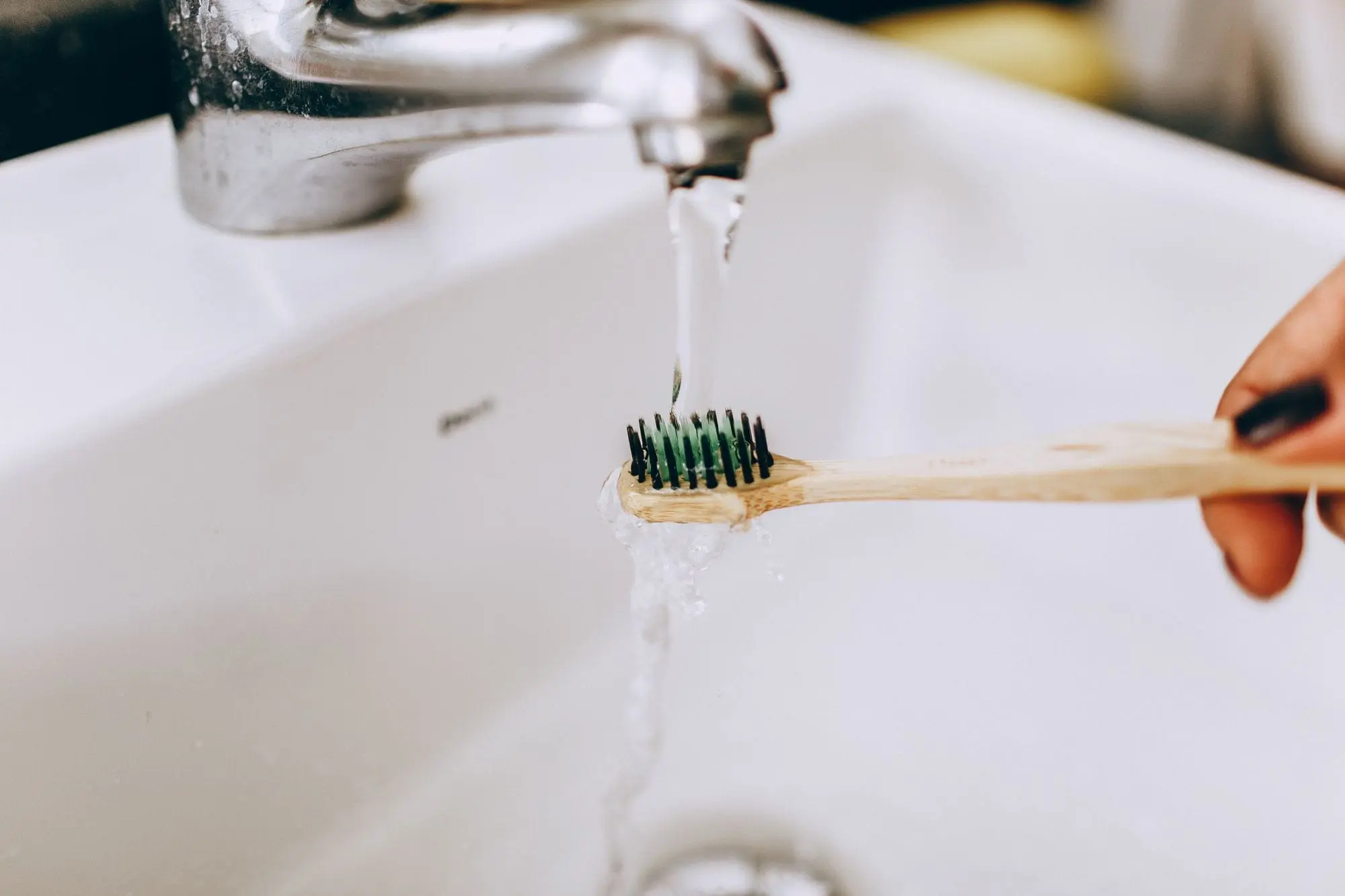
It is one of the first questions people ask after landing in Bangkok, Phuket or Koh Samui. The tap water is not meant for drinking, so what about the small amount that goes in your mouth twice a day when you brush your teeth? The answer is more nuanced than a plain yes or no, and it depends on where you are staying and on who is doing the brushing.
In most Thai cities, brushing your teeth with tap water carries a low risk for a healthy adult, because you rinse and spit rather than swallow. Official travel advice is more cautious: the CDC recommends brushing with bottled or disinfected water. The safest habit is to use the same filtered or dispensed water you drink.
Why the answer is "it depends"
Tap water in Thailand is treated at the plant. In Bangkok, the Metropolitan Waterworks Authority treats and chlorinates the supply, and in the provinces the Provincial Waterworks Authority does the same. The problem is rarely the plant. It is what happens between the plant and your bathroom: ageing pipes, pressure drops that let contaminants in, and above all the storage tanks on roofs and under buildings that are cleaned less often than they should be. Our guide on whether you can drink tap water in Thailand covers the distribution side in detail.
Brushing is different from drinking. You take in a few millilitres at most, and most of it is spat out. That is why many long-term residents brush with tap water without a second thought. It is also why the risk is not zero: a small dose of the wrong bacteria is still a dose, and a stomach that is not used to the local water reacts more readily than one that has lived with it for years.
What the CDC and travel clinics recommend
The US Centers for Disease Control and Prevention keep a page on food and drink considerations when travelling. Its advice for destinations where tap water is not reliably safe is short: "Brush your teeth with bottled or disinfected water." The same page advises against ice made from tap water and notes that factory-sealed bottles are safer than tap water.
That advice is written for all travellers, including children, older people and anyone with a weaker immune system. For those groups, brushing with filtered or bottled water is the sensible default. For a healthy adult in a well-maintained city building, the risk is low. It is a matter of how much caution you want, not of a hard rule.
Where brushing with tap water is lower risk, and where it is not
The quality of what comes out of the tap depends on the building more than on the city. Use the table below as a rough guide, and when in doubt ask the reception or the villa manager where the water comes from and when the tank was last cleaned. Resort towns on the mainland have their own profile, as our article on Hua Hin's tap water shows.
| Situation | Typical water source | Brushing with tap water |
|---|---|---|
| Modern condominium in Bangkok on mains supply | Treated mains water, building tank | Low risk for healthy adults if the tank is maintained |
| Hotel or resort | Mains or own supply, rooftop or ground tank | Low to moderate; use the in-room drinking water if provided |
| Island villa or guesthouse | Well, trucked water or mountain water, private tank | Moderate; prefer filtered or dispensed water |
| Rural area or older building | Variable supply, old pipes, infrequent tank cleaning | Moderate to higher; use filtered or bottled water |
| Children, pregnant women, people with weaker immunity | Any | Use filtered or bottled water |
Islands deserve a special mention. On Koh Samui, Koh Phangan and parts of Phuket, many properties rely on wells and water deliveries by truck, stored in tanks that sit in the heat. Our guide to tap water in Koh Samui explains why island water is a different case from Bangkok.
How to brush your teeth without buying a bottle every time
If you decide to play it safe, you do not need a plastic bottle in the bathroom. A few habits make it easy:
- Keep a small glass or cup in the bathroom and fill it from the water you drink, whether that is a filtered dispenser, a kettle of boiled water or a refillable bottle.
- Rinse the toothbrush head with the same water, and shake it dry. A toothbrush that sits wet in a humid bathroom grows more than a toothbrush rinsed in tap water ever would.
- Keep your mouth closed in the shower. Showering and washing your face with tap water are fine; swallowing it is the only thing to avoid.
- At home, a point-of-use system removes the question altogether. A reverse osmosis system on the existing water line turns tap water into filtered, remineralised drinking water, and an air-to-water machine makes drinking water from humidity with no connection to the mains at all. For a house or apartment, the home versions are on our online shop.
What if you swallow some tap water?
It happens, and for most people nothing follows. The usual reaction, when there is one, is a mild stomach upset within a day or two that passes on its own with rest and plenty of safe fluids. If symptoms are severe, last more than a couple of days, or involve a child or someone with a health condition, see a doctor or pharmacist. Thai pharmacies are everywhere and the staff are used to this question. This article is general information, not medical advice.
For hotels and villa managers: the question your guests are asking
If you run a hotel, resort or managed villa, "can I brush my teeth with the tap water?" lands at your reception every week. Two things answer it well. The first is a water source your staff can describe honestly: where it comes from, how it is stored and how often the tank is cleaned. The second is drinking water in every room that does not come in a plastic bottle, so guests fill a glass for the bathroom without thinking about it.
Minairal installs and services on-site drinking water systems for hotels and resorts across Thailand, from Koh Samui and Phuket to Hua Hin and Bangkok, with maintenance by our own technicians. Tell us the number of rooms and points of use and we come back with a configuration: request a site assessment.
Frequently asked questions
Can you brush your teeth with tap water in Bangkok?
For a healthy adult in a well-maintained building, yes, with a low risk, because the water is treated and chlorinated and you spit rather than swallow. The CDC still recommends bottled or disinfected water for brushing when travelling, and that is the safer choice for children and sensitive stomachs.
Is it safe to brush your teeth with tap water in Phuket or Koh Samui?
Island water is more variable, because many properties use wells or trucked water held in private tanks. Use filtered or dispensed water for brushing unless the property can tell you where its water comes from and how the tank is maintained. Our service centre on Koh Samui installs systems for exactly these properties.
Can you rinse your mouth with tap water in Thailand?
Rinsing carries the same low risk as brushing, as long as you spit the water out. If you prefer not to take any chance, rinse with the water you drink.
Does boiling make tap water safe for brushing?
Boiling kills bacteria and parasites, so cooled boiled water is fine for brushing. It does not remove dissolved metals or sediment, which is why filtration is the longer-term answer for drinking.
Can you drink the shower water or wash your face with it?
Washing your face and showering are fine. The only precaution is not to swallow the water, which is easy to manage once you are used to it.