Most visitors learn quickly that tap water in Thailand is not meant to be drunk at the tap. The next question follows at the first iced coffee or the first beer poured over ice: is the ice safe? Ice in Thailand is an industry in its own right, with its own regulation, and the answer is more reassuring than most travel forums suggest, provided you know what to look at.
Short answer: commercial ice in Thailand is generally safe. It is made in licensed factories from treated water, under Ministry of Public Health rules, and sold in sealed bags. The risk is rarely the ice itself. It is what happens between the factory and your glass: open sacks, dirty storage bins, hands and scoops.
Where ice in Thailand comes from
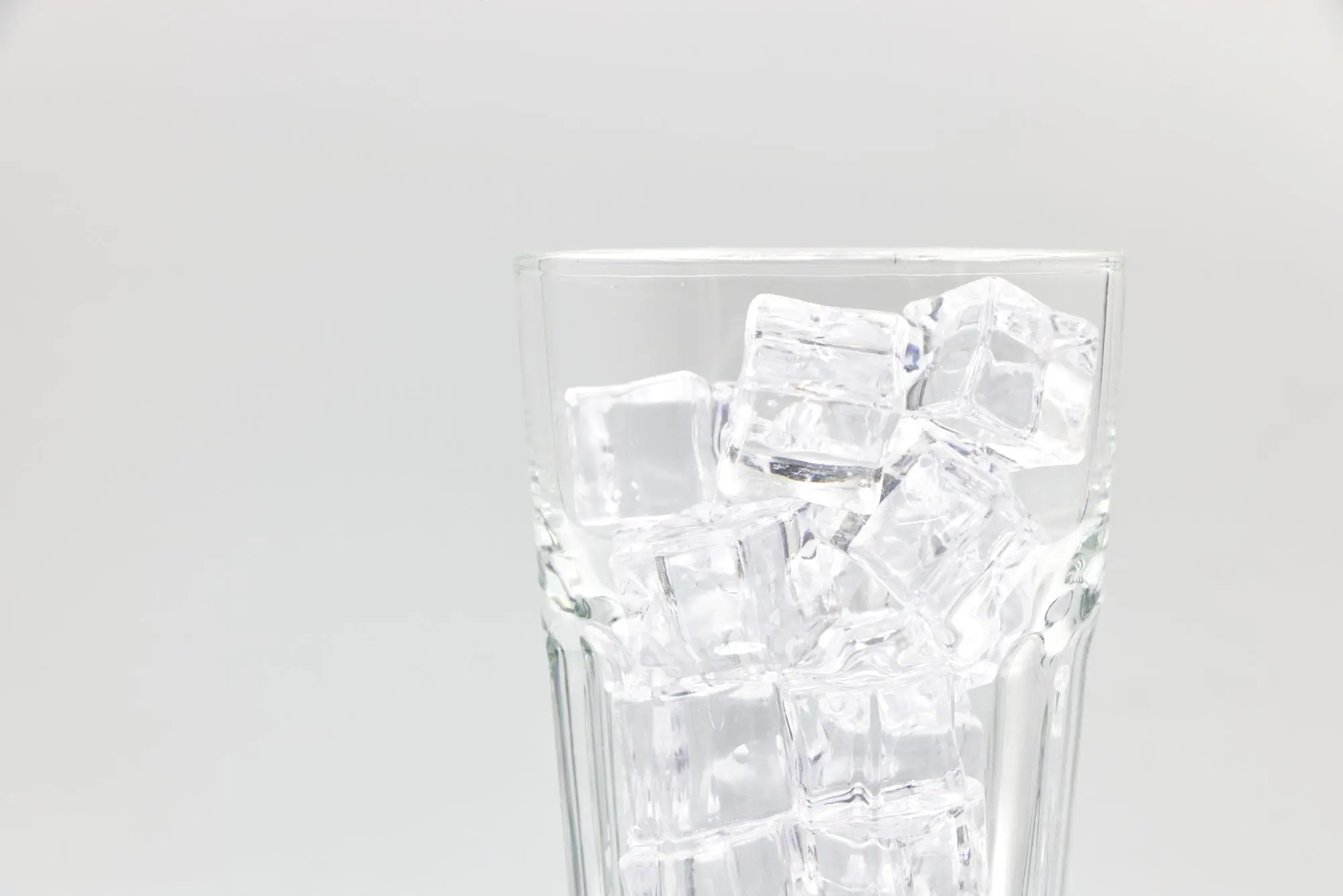
Very little ice served in Thailand is made in a kitchen freezer. Almost all of it comes from ice factories that deliver daily to hotels, restaurants, bars, markets and street stalls. The familiar cylinder with a hole through the middle is called tube ice. It is made by freezing water inside vertical steel tubes and then releasing the ice, which leaves the characteristic hollow centre. Factories also make crushed ice, ice cubes and large blocks that are later cut or ground on site.
Ice is a controlled food in Thailand. The Thai Food and Drug Administration lists ice among the foods governed by Ministry of Public Health notifications, the latest being Notification No. 463 of B.E. 2568 (2025), which sets quality and labelling requirements and requires producers to follow good manufacturing practice. The water used must meet drinking water criteria before it is frozen, which is why a factory typically filters, softens and disinfects its supply before it reaches the freezing tubes.
Is the ice with a hole in it safe?
The hole is often repeated as the rule of thumb for safe ice, and the logic behind it is sound. A hollow tube can only be made by an industrial ice machine, so it tells you the ice came from a factory and not from a tray of tap water in someone's freezer. It does not tell you how the ice was stored and handled afterwards, which is where the real variation lies. The same logic applies to the bathroom tap, as we explain in our article on brushing teeth with Thai tap water.
A 2021 study in Thasala, Nakhon Si Thammarat, published in the Malaysian Journal of Public Health Medicine, sampled ice from twelve food and beverage premises and found coliform bacteria in every sample. The authors did not blame the factories. They identified ice storage and the handwashing behaviour of food handlers as the main sanitary issues. In other words, the ice left the factory in good condition and was contaminated on the premises.
What the Department of Health recommends
The Thai Department of Health issues guidance on ice every hot season. Its 2023 advice, relayed by the Government Public Relations Department, is a useful checklist for anyone buying bagged ice:
- Choose ice from a producer with a GMP mark and a 13-digit food registration number on the bag, with the manufacturer's name and address.
- The bag should be clean and sealed. Avoid ice delivered in burlap sacks, and ground ice sold loose from sacks.
- Good ice looks clear and leaves no white sediment when it melts.
- Ice should be kept in a dedicated, clean, lidded container, raised off the floor, and never stored together with drinks, vegetables or meat.
- Ice should be served with a scoop, not with a glass or a can dipped into the bin.
The same department issued similar advice in 2021, recommending ice that is properly packed and sealed or certified by the Food and Drug Administration. The consistent message is that packaging and handling matter more than origin.
Ice in hotels and restaurants
Hotels and resorts in Thailand usually either buy bagged factory ice or run their own ice machines connected to a filtered water line. In both cases the ice in your room or at the bar is as safe as the water that went into it and the hygiene of the machine or the bin. A well-run hotel cleans its ice machines on a schedule and keeps the ice bins closed. If you want to check, look at the ice bucket rather than the ice: a clean bucket with a scoop and a lid is the sign you are looking for. On an island such as Phuket the feed water itself varies, as our article on Phuket's tap water explains.
Restaurants and cafés mostly serve factory tube ice, delivered in bags each morning and transferred to an insulated bin. The same questions apply. Is the bin closed, is it clean, is there a scoop? A busy restaurant with high turnover rarely has old ice sitting around, which helps.
For a restaurant or hotel, two things are within reach: the water served, and the handling of the ice. A Pure reverse osmosis system on the kitchen line covers the first. It filters the mains water to 0.0001 micron and remineralises it before dispensing, for the water poured at the table and in the kitchen. Ice is a separate supply: bagged from a licensed factory, or made in a dedicated ice machine with its own water feed and treatment, and its safety rests on the machine's maintenance and the bin it is kept in. Our page for restaurants and cafés describes how kitchens use Pure for drinking water.
Ice from street stalls and markets
This is where visitors ask the most questions, and where the Department of Health checklist is most useful. At a street stall the ice is usually factory tube ice too. The difference is the container. A lidded cooler with a scoop is a good sign. Ice in an open sack on the pavement, or ice that has been touched by hand, or crushed ice scraped from a block with a tool that was lying in the open, is the version to pass on. A stall that pours your drink over ice and then uses the same ice to chill bottles is another one to avoid, since the department specifically warns against mixing ice with other items.
Ice at home: what to use
If you make your own ice in Thailand, the question becomes the water, since freezing does not treat it. Tap water that is not drinkable does not become drinkable by being frozen. Use the same water you would drink: bottled, filtered, or produced on site. Households that use a Pure system or an Air system simply fill the trays from the dispenser. The ice cube makers on our online shop work the same way, from water you have already treated.
A quick comparison
| Type of ice | Where it comes from | What to check |
|---|---|---|
| Tube ice with a hole | Licensed factory, treated water | Sealed bag, GMP mark, clean lidded bin, scoop |
| Crushed or shaved ice | Factory block, ground on site or at the stall | How and where it was ground, container hygiene |
| Hotel or bar machine ice | Ice machine on the premises | The machine's own water treatment, cleaned on schedule |
| Home tray ice | Whatever water was poured in | Use drinking water, never untreated tap water |
Frequently asked questions
Is tube ice in Thailand made from tap water?
Ice factories start from mains or well water, but they are required to treat it to drinking water criteria before freezing, under Ministry of Public Health rules. The ice is not frozen tap water in the sense of untreated water from the tap. Additives such as fluoride are a separate question, covered in our article on fluoride in drinking water.
Can I have ice in drinks at a Thai restaurant?
In most restaurants, yes. The ice is factory made and delivered daily. If the bin is closed and clean and a scoop is used, there is no particular reason to refuse it.
Is crushed ice less safe than tube ice?
Not by nature, but it is handled more. Crushed ice is often ground from a block on the premises, so its safety depends on the grinder and the person doing the grinding. Tube ice goes from a sealed bag straight into the bin.
Can a restaurant or hotel make its own ice from mains water?
Yes, with a dedicated ice machine that has its own water treatment, cleaned on the schedule its manufacturer sets. A Minairal system covers the drinking water served in the kitchen and at the bar, not the ice machine, which it cannot be connected to. For the drinking water side, contact us to discuss a configuration for your kitchen or bar.