AWG Explained: How It Works and What It Costs
Access to clean drinking water is a basic necessity, yet in many parts of the world it remains a challenge. Innovations in water technology have provided practical solutions for homes, offices and communities. Among these, atmospheric water generators have emerged as a reliable and eco-friendly way to produce fresh, mineral-rich water from the air. This article explains the AWG meaning, how these systems work, the technology behind water harvesting from the atmosphere, and what to consider when deciding to buy an atmospheric water generator.
What is an Atmospheric Water Generator
An atmospheric water machine is a device designed to extract moisture from the air and convert it into clean drinking water. Unlike traditional water sources such as taps, wells or bottled water, these machines rely on the humidity in the air to generate water, making them a sustainable and versatile solution.
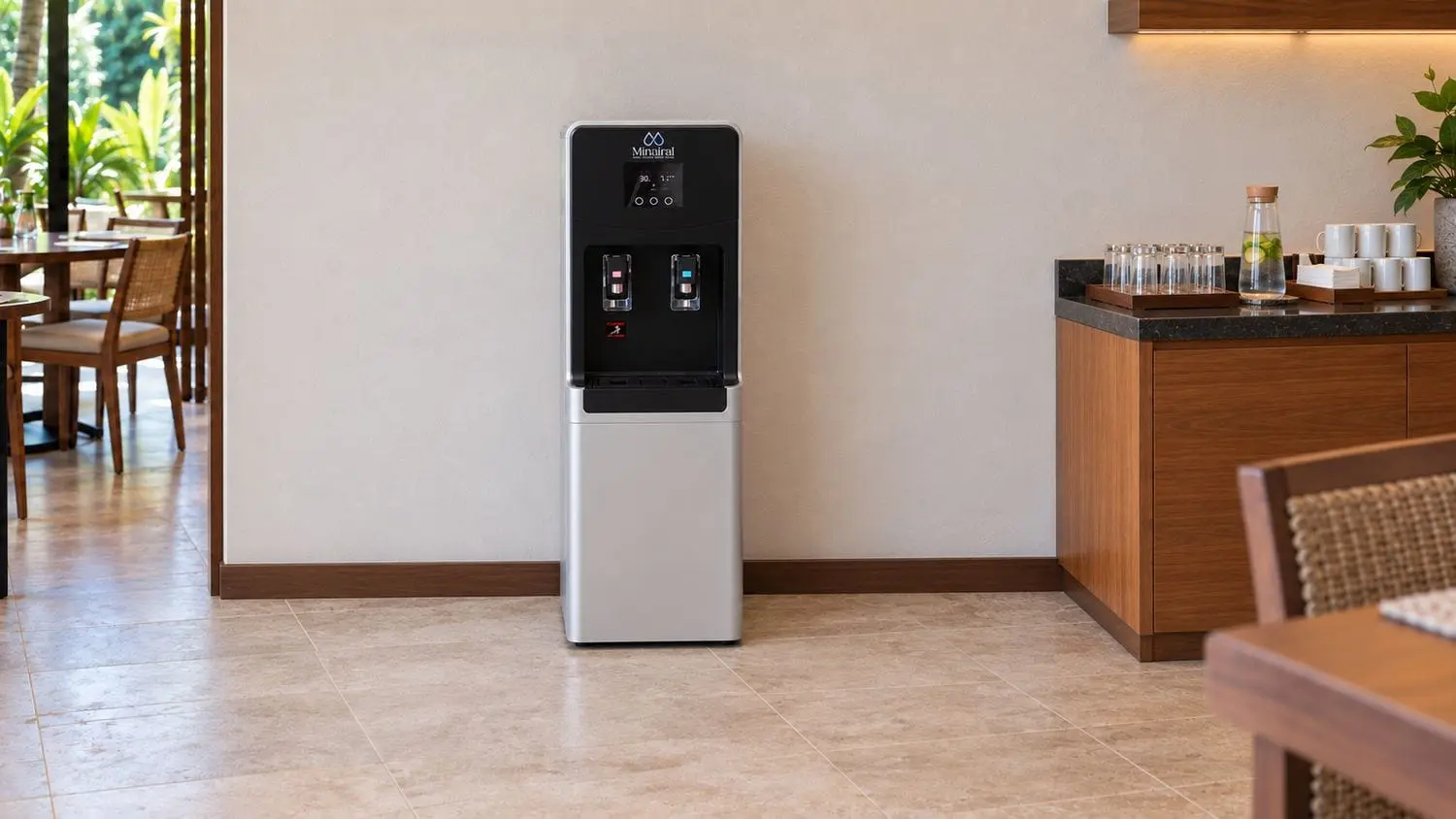
The term AWG stands for Atmospheric Water Generator. These devices come in various capacities, from countertop units suitable for a villa or a small office to floor-standing systems that supply hotels, restaurants and workplaces. By drawing moisture from the air, filtering it and adding essential minerals, an AWG provides a continuous supply of fresh water without relying on traditional water infrastructure.
How Atmospheric Water Generators Work
Understanding how atmospheric air water generators function requires a little of the basic science behind condensation. Air naturally contains moisture in the form of humidity. AWGs capture this moisture and convert it into liquid water through condensation and filtration. We go deeper in our guide on how atmospheric water generators work.
Step 1: Air Intake
The process begins with the atmospheric water machine drawing in air from the surrounding environment. A fan channels the air through an air filter and into the condensation system. The daily output is quoted as an average for a given model, for relative humidity between 30% and 80%.
Step 2: Condensation
Once the air enters the system, it passes over cooled coils. As the temperature of the air drops below its dew point, moisture in the air condenses into water droplets. This process is similar to the way condensation forms on a cold glass on a hot day. The condensed water collects in a tank inside the machine, ready for filtration.
Step 3: Filtration and Mineralization
After condensation, the raw water passes through multiple filtration stages to remove dust, particles and impurities. Modern atmospheric water machines include sediment and carbon filters, UV sterilization and a mineral filter; on the Minairal Air Stand Pro the sequence runs to seven stages, including reverse osmosis. Mineralization restores calcium, magnesium, potassium and sodium, which improve the taste and quality of the water and make it suitable for daily consumption. See what the water contains.
Step 4: Water Dispensing
Finally, the purified water is dispensed for use. Many AWG systems offer hot and cold water. This makes them practical for a variety of settings, including homes, offices, hotels and clinics.
Advantages of Atmospheric Water Machines
The increasing popularity of atmospheric air water generators is not surprising, given the benefits they offer:
- Fresh water anytime: AWGs provide a continuous supply of water, independent of municipal water sources or bottled water deliveries.
- Eco-friendly solution: by eliminating the need for plastic bottles, these machines reduce environmental waste and the carbon footprint associated with bottled water.
- Versatile placement: AWGs can be placed anywhere with access to air and electricity. They are suitable for homes, offices and commercial spaces.
- Health and safety: with multi-stage filtration and sterilization, the water produced is protected from the contaminants commonly found in other sources.
- Sustainable water harvesting: water harvesting from the atmosphere provides a reliable solution for areas facing water scarcity or an unreliable municipal supply.
Factors Affecting Water Production
When considering an atmospheric water machine, it is important to understand what influences water output:
- Operating range: the systems are designed for relative humidity between 30% and 80%, a range Thailand sits in all year round.
- Machine capacity: AWGs come in different sizes, and the average daily production depends on the model: 13, 16 or 30 litres a day for the Minairal Air range.
- Maintenance: regular filter replacement and cleaning are essential to maintain water quality and efficiency.
How Much Does an Atmospheric Water Generator Cost
If you are considering whether to buy an atmospheric water generator, cost is a natural concern. The price of an AWG depends on its capacity and features. Countertop units designed for home use are more affordable, while floor-standing machines for commercial use are a more significant investment. Prices for private customers are listed on our shop; businesses can request a quote based on their site.
Additional costs to consider include filter replacements, routine maintenance and electricity. However, when compared with the long-term cost of bottled water, an atmospheric water machine can be an economical and sustainable choice. Our comparison of air-to-water, reverse osmosis and bottled water lays out the trade-offs.
Applications of Atmospheric Water Generators
Atmospheric air water generators have a wide range of applications across residential, commercial and emergency scenarios:
- Homes: a reliable source of drinking water for families without reliance on bottled water.
- Offices and workspaces: staff and visitors have access to fresh mineral water throughout the day.
- Hotels and restaurants: a sustainable water solution that supports environmental responsibility and reduces plastic use.
- Clinics and wellness centres: safe drinking water where hygiene and quality are critical.
- Remote locations: drinking water in areas where traditional water infrastructure is damaged or unavailable.
Benefits of Water Harvesting from the Atmosphere
The concept of water harvesting from the atmosphere is central to the AWG’s appeal. Unlike traditional water sources, AWGs tap into a renewable and widespread resource: atmospheric moisture. This method offers several key advantages:
- Reduces dependence on municipal water supplies, which may be limited or contaminated.
- Provides access to fresh water in remote or water-stressed regions.
- Supports sustainability initiatives by decreasing reliance on bottled water and the associated plastic waste.
- Creates a self-sufficient water system for homes and businesses.
By utilizing the air around us, AWGs transform a previously untapped resource into clean, drinkable water.
Choosing the Right Atmospheric Water Generator
When deciding to buy an atmospheric water generator, consider the following factors:
- Water production capacity: assess your daily water needs and select a machine whose average output meets them.
- Filtration and mineralization: ensure the AWG includes effective purification and mineral restoration.
- Space and placement: choose a countertop or floor-standing model that fits the intended location.
- Maintenance requirements: look for machines with easy-to-replace filters and a service network nearby.
- Energy use: evaluate electricity consumption, especially for larger models.
These considerations will help ensure that the AWG provides consistent, high-quality water while remaining convenient and cost-effective.
Minairal
At Minairal, we design, install and service atmospheric water machines in Thailand. Our Air range has three models: the countertop Air Top (13 litres a day on average, hot and cold), the floor-standing Air Stand (16 litres a day on average, hot and cold) and the Air Stand Pro (30 litres a day on average, cold). For sites with a reliable water line, the Pure range filters the existing supply with five-stage reverse osmosis and remineralisation.
We handle installation, filter changes and support from three service centres in Koh Samui, Phuket and Hua Hin, making it simple for our customers to enjoy clean, fresh water without any hassle. By choosing Minairal, you are not only accessing high-quality water but also contributing to environmental sustainability by reducing plastic waste.
Our team is available to guide you on choosing the right machine for your space and needs.
How to Maintain an Atmospheric Water Machine
Proper maintenance is essential to keep an atmospheric air water generator functioning efficiently and producing high-quality water:
- Regular filter replacement: on Minairal Air systems the pre-filter is changed every six months and the other cartridges every twelve months.
- Cleaning the storage tank: the tank is cleaned during maintenance visits to prevent bacterial growth.
- Check water quality: TDS and pH are checked during routine maintenance.
- Inspect coils and fans: keeping the air intake clean ensures good condensation.
Following these steps extends the lifespan of the AWG and ensures a consistent supply of safe drinking water.
Conclusion
Atmospheric water machines represent a significant step forward in sustainable water solutions. By harnessing the moisture in the air, these devices provide fresh, mineral-rich drinking water without the need for plumbing or bottled water. Understanding the AWG meaning, how the machines operate and the factors affecting water production can help consumers make informed decisions when choosing a system.
While the cost of buying an atmospheric water generator depends on capacity and features, the long-term benefits, including convenience, sustainability and access to clean water, make it a worthwhile investment.
With companies like Minairal, users can enjoy reliable, safe and eco-friendly water solutions while contributing to a more sustainable future. Whether for home use, offices or commercial spaces, AWGs offer a practical and responsible way to ensure high-quality hydration.
FAQs
1. What is an atmospheric air water generator?
An atmospheric air water generator is a device that extracts moisture from the air, condenses it, filters it and produces clean drinking water. It works independently of plumbing, making it suitable for homes, offices and areas with limited water access.
2. How does an atmospheric water machine produce drinking water?
The machine pulls in air, cools it to create condensation, collects the water droplets, and then filters and mineralizes the water. The final output is fresh, purified drinking water, dispensed hot or cold.
3. How much does an atmospheric water generator cost?
The cost depends on factors like water production capacity and filtration technology. Countertop home units are generally more affordable, while floor-standing commercial generators require a higher investment. Choosing a model based on your daily water needs is recommended.
4. Is water harvested from the atmosphere safe to drink?
Yes. When processed through an AWG’s multi-stage filtration, UV sterilization and mineralization, the water is clean and safe. The system removes dust, contaminants and microorganisms to ensure high-quality drinking water.
5. Should I buy an atmospheric water generator for my home or office?
It is a good choice if you want a reliable water source without relying on bottled water or plumbing. These machines reduce plastic waste, provide fresh water anytime, and are suitable for homes, workspaces and commercial setups.
For your home, browse the models on shop.minairal.com. For a business, request a site assessment.