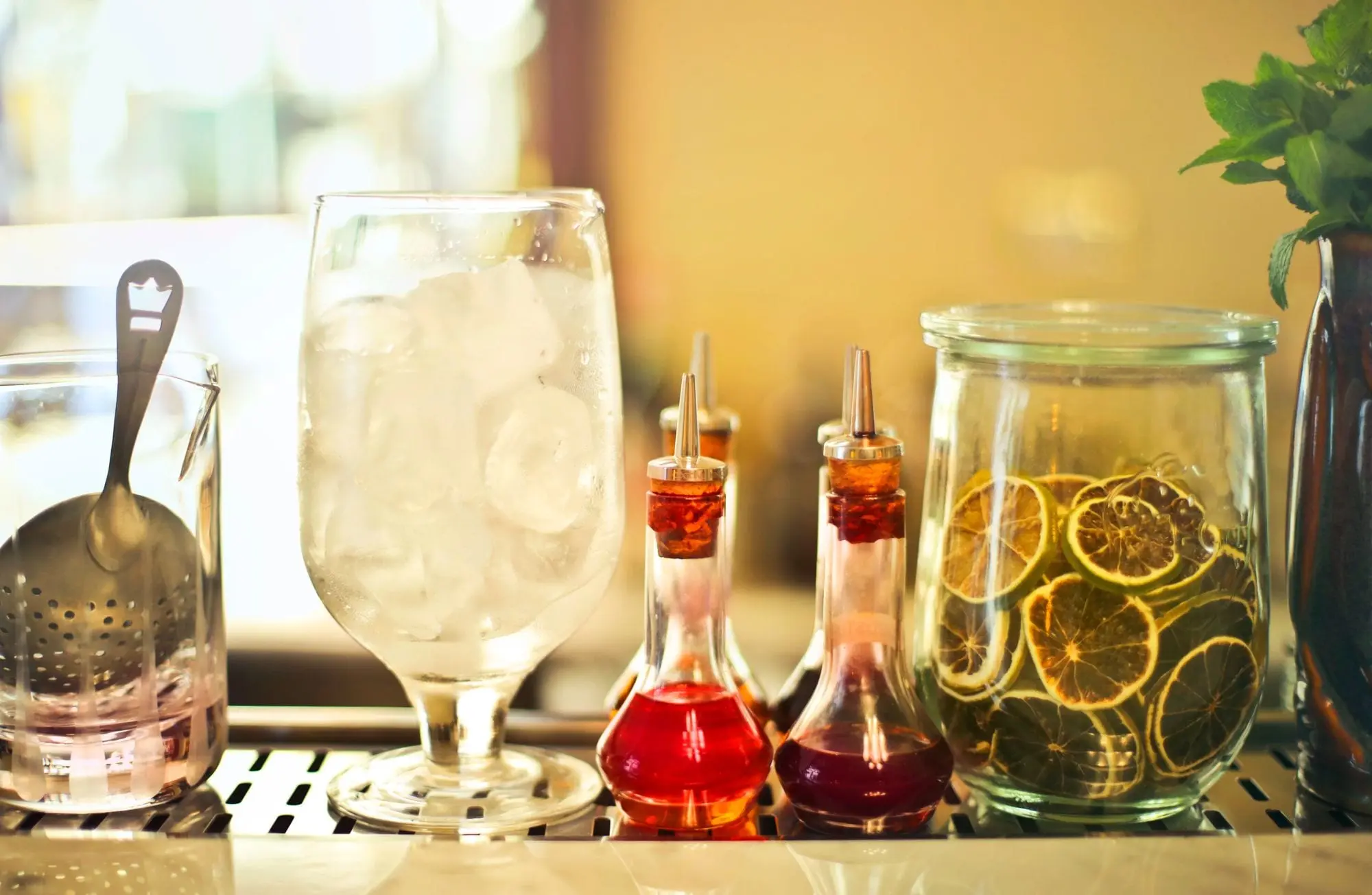
Sparkling water is on almost every table in Thailand's restaurants and bars, as a drink in its own right, as the base of a highball or a mocktail, or in a long glass with lime for the heat. Most venues buy it in bottles: a case arrives, goes into the fridge, comes out one bottle at a time, and the empties go out the back door. The cost is on the invoice. The handling, the fridge space and the bins are not.
A growing number of venues make their sparkling water instead. The idea is simple: a still water system produces cold drinking water on site, and a carbonator adds food-grade CO2 to it just before service. This article explains how that works for a restaurant or a bar, what the still water side needs, what the gas costs per litre, and where the limits are.
In short, a restaurant or bar can serve sparkling water made on site by pairing a drinking water system, which produces cold mineral water from the kitchen line or from the air, with a carbonator and food-grade CO2. The gas costs about ฿7.80 per litre on our online shop, and every bottle served is a bottle not bought.
Why make sparkling water on site rather than buy it?
- Volume without stock. A venue serving 100 bottles of water a day gets through 36,500 bottles a year, as we show on our restaurants and cafés page. Making it on site removes the pallets, the counting and the stock-out on a busy night.
- Fridge space. Chilled still water from the system goes straight into the carbonating bottle. The fridge holds bottles ready for service, not cases waiting to be chilled.
- Cost per litre. The gas is the running cost, and it is calculated below.
- Consistency. The same water every day, from the same source, whatever the supplier delivered that week.
- The table. Sparkling water served in a glass bottle that can carry your logo, with the mineral composition printed on the label.
What does the still water side need?
A carbonator adds gas and nothing else, so the water it receives is the water the guest drinks. That water should be filtered, cold, and consistent in taste, because CO2 sharpens whatever is in it. For a restaurant, the source is usually the line already feeding the kitchen.
A Minairal Pure system connects to that line and treats it through five-stage reverse osmosis rated at 75 GPD, roughly 12 litres an hour, then polishes the taste with a post-carbon stage and adds calcium, magnesium, potassium and sodium through a Biocera mineral filter. The Pure Countertop holds 7 L in stainless steel tanks and suits a bar or a service station; the Pure Floor holds 13 L for a kitchen. Both serve hot at 90°C for tea and coffee and cold at 4°C, which is the temperature you want before carbonating.
Where there is no water line, on a terrace, a beach bar or a rooftop, an Air system produces drinking water from the humidity in the air. The Air Stand Pro delivers cold water only, 22 L a day on average (up to 30 L), from a 13.5 L tank with seven filtration stages. The Air Stand serves hot and cold at 16 L a day on average. Average daily output is given for relative humidity between 30% and 80% and an average temperature of 25°C, and the volume is checked against your covers at the site assessment. On Koh Phangan we service these systems and exchange CO2 cylinders in Thong Sala.
How much does sparkling water cost per litre on site?
The gas is the variable cost. The carbonator sold on our online shop, the Soda Maker Kit, uses 380 g cylinders of food-grade CO2 that make up to 50 litres each.
| Item on our online shop | Price | Calculation |
|---|---|---|
| CO2 cylinder refill (exchange) | ฿390 | ฿390 ÷ 50 litres = ฿7.80 per litre; swapped on the spot at our shops on Koh Samui, in Phuket, Hua Hin and on Koh Phangan, or by post with delivery across Thailand |
| Additional CO2 cylinder | ฿890 | Spare cylinders so service never stops while one is away for exchange |
| Soda Maker Kit | ฿3,990 (Inox and Glass ฿6,490) | Manual countertop carbonator, bottle and a first cylinder |
| 500 mL glass bottle, optional | Part of the system offer | Refilled at the bar between services, can carry your logo |
Worked example for a bar serving 20 litres of sparkling water a day, six days a week: 20 × 6 × 52 = 6,240 litres a year, or 125 cylinder exchanges, which is ฿48,750 of gas a year, or ฿7.80 per litre however you slice it. Set that against your current invoice for bottled sparkling water, divided by the litres on it, and against the 12,480 half-litre bottles that would otherwise have been delivered and thrown away.
How does it fit into service?
The Soda Maker Kit is a manual countertop unit designed for home use, with no electricity and no plumbing: you fill the bottle with cold water from the system, press a few times, and the bottle is ready. In a café or a small bar serving a few litres a day, that is a routine the bar staff absorb easily: carbonate a batch of chilled bottles before service and keep them in the fridge. For venues serving much larger volumes, or wanting carbonation on tap, talk to us about the configuration before buying; the right setup depends on your covers and your bar layout.
- Cold still water from the Pure or Air system into the carbonating bottle.
- Carbonate to taste. Lightly for table water, more strongly for highballs.
- Decant into 500 mL glass bottles for the table, or pour straight into the glass at the bar.
- Keep two or three cylinders in rotation so an empty one never stops service. Empties are swapped instantly at our shops, or exchanged by post anywhere in Thailand. Minairal cylinders are compatible with other major soda maker brands such as SodaStream, so a bar already equipped can switch to our refills without changing its carbonator.
What about maintenance and water quality?
The carbonator has no filter and no motor. The water system is serviced on a schedule, Monday to Saturday, 9:00 to 18:00: the sediment pre-filter every 4 months on Pure and every 6 months on Air, the other cartridges every 12 months. TDS and pH are checked during routine visits, and the business service plan includes an annual test by an ISO 17025 accredited laboratory, so you can show a guest what is in the water. A fault gets a response the same day in most cases, 48 hours at the latest, from our teams on Koh Samui, in Phuket, Hua Hin and Bangkok.
The wider case for producing water on the premises rather than receiving it by truck is set out in our article on on-site water generation and fewer deliveries.
Frequently asked questions
Can a restaurant use tap water in a carbonator?
Technically yes, but the carbonator adds nothing to the water and removes nothing. Filtered, remineralised cold water from a system such as Pure gives a consistent, clean result that tap water in Thailand does not.
How much CO2 does a bar use?
One 380 g cylinder makes up to 50 litres. A bar serving 20 litres a day uses a cylinder every two and a half days, so plan on several cylinders in rotation and a refill at ฿390 each, swapped at one of our four shops or delivered anywhere in Thailand from our online shop.
Is home-style carbonation enough for a busy venue?
For a café or a small bar serving a few litres a day, a manual carbonator works well. For larger volumes, contact us to discuss the configuration before investing.
Can we serve it in our own branded bottle?
Yes. The optional 500 mL reusable glass bottle can carry your logo alongside ours, and the label prints the mineral composition of the water.