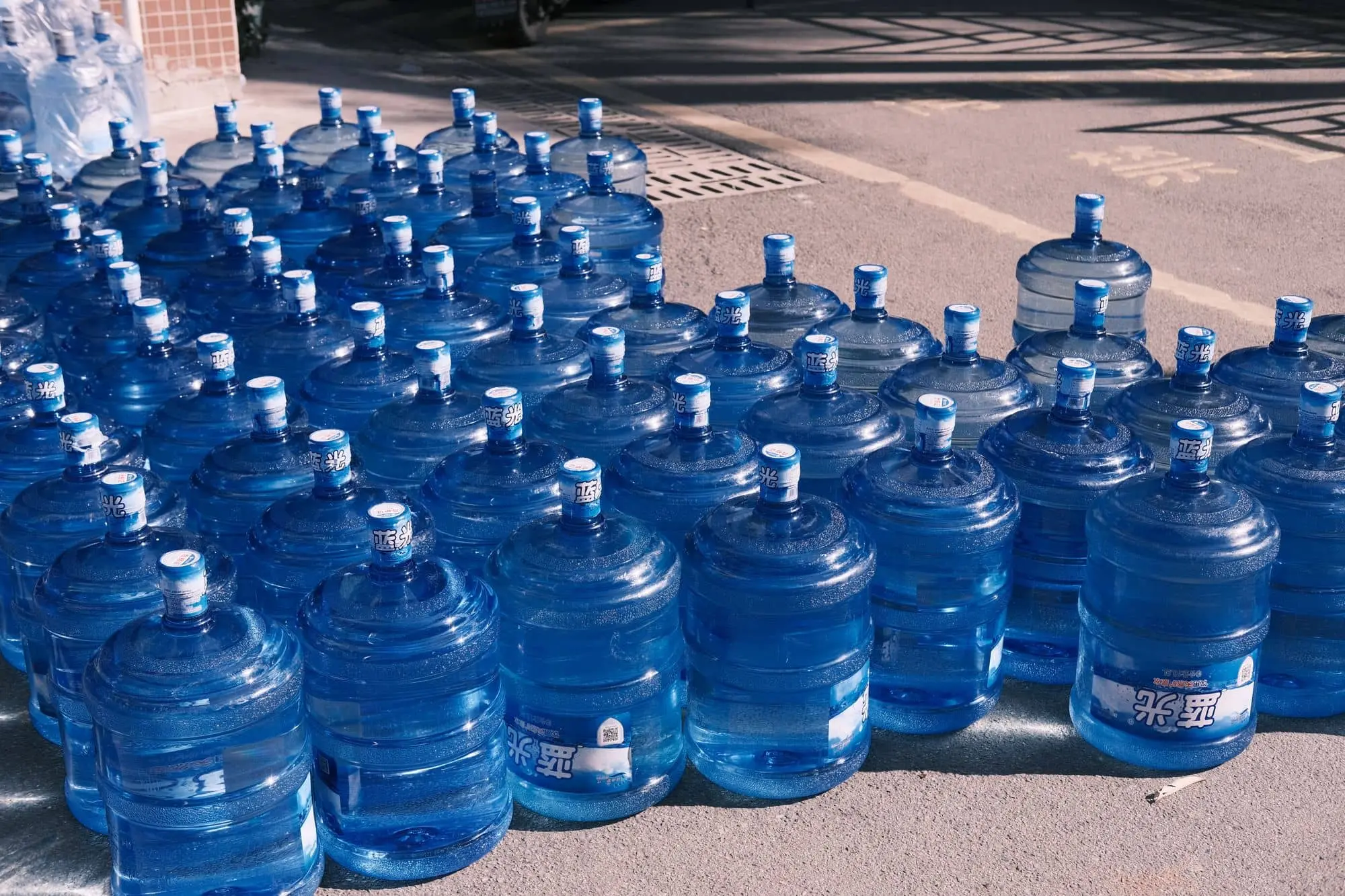
Delivered 20-litre water bottles in Thailand are safe to drink when three things are true at once: the plant that fills them holds a Thai FDA licence and follows GMP, the bottle is cleaned and sealed properly on each refill, and the dispenser in your home or office is sanitised regularly. The water itself usually passes. The failures found in surveys are almost always in the bottle, the dispenser or the vending machine that comes after the plant.
This guide explains the rules that cover bottled water in Thailand, where contamination actually gets in, and a short checklist you can run in five minutes.
Which Thai rules cover drinking water in bottles?
Drinking water in sealed containers is a controlled food under the Food Act. The Ministry of Public Health Notification No. 61 (1981), amended by No. 135 (1991) and later notifications, sets the quality standard: pH between 6.5 and 8.5, total solids of 500 mg/L or less, hardness of 100 mg/L or less, limits on chloride, nitrate, iron and lead, coliform bacteria below 2.2 MPN per 100 ml, and no E. coli, Salmonella or Staphylococcus aureus. Plants must follow good manufacturing practice, and every product carries a Thai FDA registration number (the 13-digit code in the อย. box on the label).
Two other rules matter for a household. Coin-operated water vending machines are a labelled-control product under the Consumer Protection Board and need a local licence. Small refill shops that fill customers' own bottles fall under local public health ordinances, which are enforced unevenly.
Where does contamination get into bottled water?
In the plant, the water is filtered, usually by reverse osmosis, disinfected and filled in a clean room. Surveys of bottled water plants find most products within the standard. The weak points are downstream.
- The bottle. A 20-litre bottle is used for years. If it is not washed, rinsed and inspected on every cycle, scratches and old caps hold biofilm.
- The handover. Bottles ride on open trucks, sit on pavements and are carried through buildings. The neck and the cap seal touch hands, floors and dust.
- The dispenser. A top-loading dispenser has a reservoir, a spike and taps that warm up in a Thai office. Without cleaning, this is where coliform results come from.
- Vending machines. Bangkok surveys of coin-operated machines have found about one sample in five contaminated with coliform bacteria, and most machines unlicensed and placed beside roads or drains.
How do you check the water plant and the brand?
- Look for the Thai FDA number on the label and check it on the FDA website. No number means no licence.
- Check that the cap is a new tamper-evident seal, not a cap pushed back on. A shrink band over the cap is the usual sign.
- Hold the bottle against the light. Floating particles, cloudiness or a green tint on the inside wall are reasons to refuse the delivery.
- Smell the water from a freshly opened bottle. A plastic or musty smell points to an old bottle or hot storage.
- Ask the supplier how often bottles are retired. Serious suppliers replace a bottle after a fixed number of cycles or when it is scratched.
How do you keep the dispenser safe?
A dispenser carries the water for the last metre, and it is the part you control. Thai public health guidance recommends checking the condition and water quality of any dispenser at least once a month.
| Task | How often |
|---|---|
| Wipe the taps and the drip tray | Daily |
| Wipe the bottle neck before loading | Every bottle |
| Empty and sanitise the reservoir and spike | Monthly, or at every third bottle in a hot room |
| Replace cracked taps and seals | As soon as seen |
| Keep the dispenser out of direct sun | Always |
A bottom-loading dispenser or a direct line reduces handling, and a dispenser with UV at the outlet keeps the water protected after the bottle. Our comparison of hot and cold water dispensers in Thailand covers the types.
Is water from a refill shop or a vending machine safe?
Refill water is the cheapest option in Thailand and the least controlled. The water entering the machine is usually municipal and fine; the risk is the filter inside, which is often not changed on schedule, and the customer's own bottle, which is rarely cleaned. If you use refill water, change your own bottles often, wash them with hot water and detergent, and avoid machines that stand by busy roads or drains. For an office or a school, refill water is not a defensible choice.
What is the alternative to bottles altogether?
The three weak points above all come from moving water in containers. A system that makes drinking water where it is drunk removes the bottle, the truck and the reservoir at once. On a building with a water line, a five-stage reverse osmosis unit such as Pure treats the supply, adds minerals back and protects the outlet with UV-C. Where the supply is poor or absent, an atmospheric water generator such as Air makes water from the humidity in the room. Our guide to water delivery versus an on-site system compares the two approaches for a business.
Frequently asked questions.
Is 20-litre bottled water safe to drink in Thailand?
Yes, from a licensed plant with a sealed cap, as long as the bottle and your dispenser are clean. The water usually meets the standard; most problems come from the handling after the plant.
How long does an opened 20-litre bottle stay fresh?
Use it within a week in an air-conditioned room, and within three or four days in a hot one. After that, the reservoir of the dispenser rather than the bottle becomes the concern.
Can you reuse a 20-litre water bottle?
Suppliers reuse polycarbonate bottles many times after industrial washing. At home, a scratched or cloudy bottle should be returned, and bottles should never be refilled from a tap or a hose.
How do you know if a water plant is licensed?
The label must show a Thai FDA registration number. You can search the number on the FDA website, and the plant should be able to show its production licence on request.
Is refill water from a vending machine safe?
It can be, but surveys in Bangkok have found around a fifth of samples contaminated and most machines unlicensed. If you rely on it, choose a machine that is sheltered, maintained and licensed, and clean your own bottles.
If you run an office, a hotel or a school and want to stop handling bottles, request a site assessment. We will check your water line and recommend the system that fits, or tell you if bottles remain the sensible choice.