Availability of clean drinking water is among the most urgent challenges in isolated areas of Thailand. Even though urban regions benefit from comparatively superior infrastructure and resources, rural and coastal areas frequently face challenges with inconsistent water supplies, ecological deterioration, and financial limitations. For these communities, obtaining safe water is more than a daily struggle: it is a matter of health and livelihood.
In response to this persistent challenge, air-to-water technology has surfaced as a practical advancement. This technology provides an effective, sustainable, and accessible method for delivering safe drinking water in Thailand's most remote areas, changing how people engage with water resources and significantly decreasing dependence on conventional systems.
A Complicated Water Crisis in Thailand's Isolated Regions
Although Thailand's stunning natural scenery frequently enchants people globally, these very settings can present distinct difficulties regarding water access and safety. The water crisis in remote regions is complex, arising from erratic weather patterns and the increasing effects of climate change.
The Challenges at Hand
Intrusion of saltwater
In coastal regions, the intrusion of saltwater presents a major problem. With rising sea levels, saltwater infiltrates freshwater sources such as wells, rivers, and lakes, making them inappropriate for drinking or agricultural purposes. For communities residing along Thailand's vast coastlines and on its islands, this means that their conventional water sources are turning unusable.
Seasonal fluctuation
The monsoon weather in Thailand establishes a clear distinction between the rainy and dry periods. Although monsoon floods can temporarily inundate freshwater supplies, the dry season frequently results in severe water shortages, making isolated regions especially susceptible.
Polluted surface and groundwater
In numerous rural and isolated regions, drinking water is still sourced from rivers or ponds. These sources are frequently tainted with bacteria, industrial residues, and agricultural runoff. Groundwater sources, although somewhat more safeguarded, can still contain heavy metals and other contaminants. Our guide on tap water in Koh Samui and Thailand describes what the mains supply typically carries.
Economic and logistical obstacles
When access to clean water is limited, numerous families turn to bottled water in Thailand. In remote regions, though, the transport and acquisition of bottled water present considerable logistical difficulties and monetary pressure. On an island, every litre arrives by boat and then by truck. The expense of continually depending on bottled water becomes unmanageable for low-income communities.
Rethinking Water Accessibility through Air-to-Water Innovation
In light of these challenges, air-to-water technology presents a transformative approach to sourcing drinking water in Thailand. This technology captures moisture directly from the atmosphere, circumventing numerous issues related to conventional water sources, including contamination, infrastructure, and accessibility.
The Technology Underlying Air-to-Water Systems
Air-to-water systems operate by extracting moisture from the atmosphere through condensation. Air moves through a filter to eliminate dust and contaminants, while the collected water is treated with filtration and UV protection. Advanced systems then restore essential minerals and bring the pH to an alkaline level, so the water meets both safety and taste expectations. The physics is explained in our guide on how atmospheric water generators work.
This method is particularly successful in Thailand's tropical climate, where humidity sits within the 30% to 80% range these systems are designed for almost all year. Even in areas with minimal infrastructure, air-to-water systems can function reliably and effectively, as long as electricity is available.
The Broader Impact of Air-to-Water Technology
In addition to supplying clean water, air-to-water technology could tackle various critical challenges encountered by remote communities in Thailand.
An Answer to Plastic Waste
Plastic pollution has reached critical levels worldwide, and Thailand is no different. Bottled water plays a major role in this issue, as millions of plastic bottles are thrown away daily. Isolated regions frequently do not have waste management systems, leading to the buildup of discarded bottles in rivers, woods, and agricultural land.
Air-to-water systems remove the necessity for a bottle of water, decreasing plastic waste and providing a more eco-friendly option. With time, this can greatly enhance the health of local ecosystems and lessen the strain on communities facing waste management issues. The figures are laid out on our sustainability page.
Strengthening Local Communities
Having access to clean drinking water in Thailand is an essential element in enhancing overall life quality. Through the provision of an independent, decentralised solution, air-to-water technology enables communities to manage their water resources effectively. Families can avoid depending on costly bottled water or unreliable traditional sources, allowing them to allocate more time and resources to other priorities like education and economic growth.
An Approach That Is Resilient to Climate Change
With the acceleration of climate change, Thailand is expected to face increasingly severe weather conditions, ranging from extended droughts to heavy floods. Air-to-water technology provides a climate-adaptive solution that can respond to these shifting conditions. By utilising atmospheric moisture instead of surface or groundwater, these systems offer a reliable and sustainable water source, even during emergencies.
Presenting Minairal: Making Air-to-Water Technology a Reality
Although air-to-water technology holds great potential, it requires companies such as Minairal to turn this idea into reality. Minairal, a Thai company based in Koh Samui, has developed a range of systems tailored to address the distinct issues of drinking water in Thailand, with over 700 systems installed across four provinces.
What Distinguishes Minairal?
Minairal's Air range is crafted for the end user, ensuring ease of use, efficiency, and dependability. Here is why it makes a difference:
Mineral water whenever, wherever
Minairal's system draws moisture from the atmosphere and treats it through filtration and UV protection. The water is then remineralised with calcium, magnesium, potassium and sodium, offering clean hydration at an alkaline pH of 8.5 and above, comparable to quality bottled mineral water.
Easy-to-use convenience
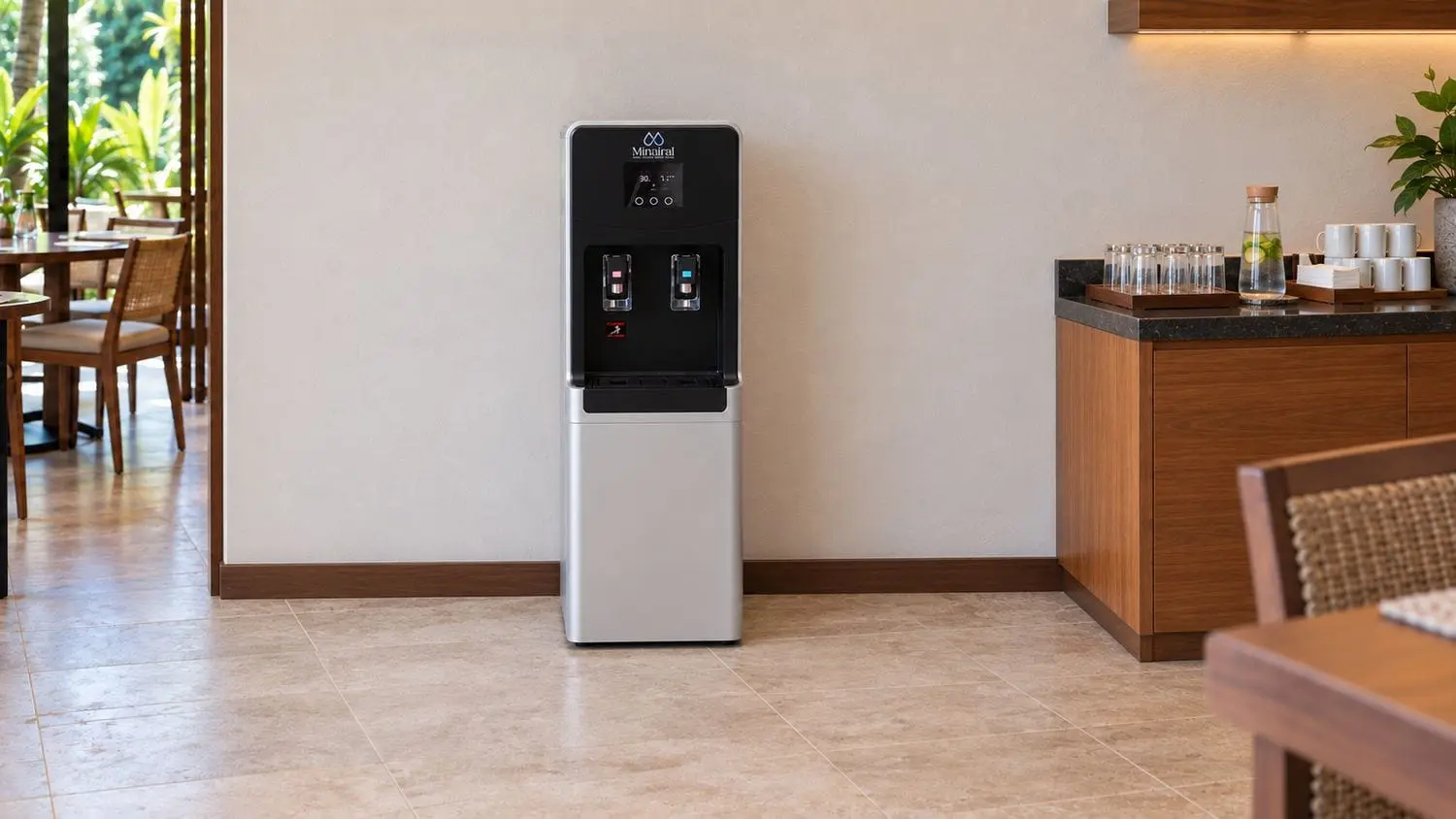
In contrast to conventional water filtration systems that necessitate plumbing, Minairal's Air systems offer a plug-in solution. This makes them usable for residences, workplaces, and sites in distant locations where no water line exists.
Environmentally friendly and sustainable
With Minairal, plastic bottles and extensive water transportation are unnecessary. This not only minimises waste but also decreases transport emissions, making it an ecologically sound option.
Hot and cold water
Minairal's Air Top and Air Stand deliver hot and cold water at the press of a button, addressing multiple requirements effortlessly. The Air Stand Pro delivers cold water at 30 litres a day on average, for sites with higher demand.
Why Minairal is Suited to Remote Thailand
Minairal's air-to-water solution is designed to address the challenges encountered by remote communities in Thailand:
- Climate fit: Thailand's humidity sits in the range Minairal systems are designed for, so they produce water throughout the year, from the coast to the hills.
- Long-term economics: by removing the need to buy bottled water, Minairal helps families and businesses reduce recurring costs over the life of the system.
- No plumbing: the units only need a power socket, so they can be set up anywhere, making them suitable for both rural communities and coastal or island sites such as Koh Samui.
- Local service: three service centres, in Koh Samui, Phuket and Hua Hin, with spare parts held in Thailand and technicians who install and maintain every system.
A Brighter Tomorrow through Air-to-Water Technology
Access to clean drinking water in Thailand is more than a basic necessity: it is a cornerstone for health, education, and economic potential. In Thailand's secluded regions, where conventional methods frequently fail, air-to-water technology represents a source of optimism.
Minairal is part of this change with a product that not only addresses the issue but also changes how people perceive water. By merging proven science with accessible design, Minairal makes clean water a reality from lively city hubs to the remote areas of Thailand.
For communities facing issues like water scarcity, pollution, or the costs of bottled water, Minairal provides more than just hydration: it delivers independence, sustainability, and a way toward a brighter future.
The decision is clear: it is time to adopt air-to-water technology and work toward a Thailand where safe drinking water is available for everyone. For a community site, a school or a business, request a site assessment. Home models are available on the Minairal online shop.